
Category: General

  • Sexual Harassment in the Armed Forces in Ukraine and Worldwide

    Sexual Harassment in the Armed Forces in Ukraine and Worldwide

    The problem of sexual harassment and sexual violence in the military exists in armies around the world. It affects not only women, although women suffer from it more often. American researchers Valerie Stander and Cynthia Thomsen believe that sexual harassment is facilitated by inherent factors of the military structure, such as the acceptance of violence in general, deindividualization, complete subordination to leadership, and the still widespread male dominance in this leadership.[1]

    Other researchers, such as Carl Castro, argue that well-developed stress resilience results in less reports of violence, and that team spirit puts pressure on victims and makes them think that by reporting violence they are “betraying” their team.[2]

    The institutional pre-condition that makes harassment or violence against others possible is a position of power. The army in general is a hierarchical structure, and the higher the person in this hierarchy is, the more opportunities they have to commit violence without consequences. The “glass ceiling” still exists in this area, so top positions in the army are occupied mainly by men.

    Sexual harassment is also part of broader issues such as misogyny, toxic masculinity, gender discrimination, lack of professionalism, and, in the case of the Ukrainian army, the Soviet legacy in professional culture.

    “It was a lieutenant colonel. At a long lecture that had absolutely nothing to do with gender, he talked about every possible thing and made a remark that ‘when you are in the army, do not bring women in any case… Never bring women to the training grounds or to the ATO [Anti-Terrorist Operation – Editor] because everyone will fuck them except you. Mark my words, I’m telling you, you’re young, inexperienced – never take them to the training grounds, because everyone will fuck them except you.[3]

    The problem of sexual harassment is accompanied by related negative phenomena, such as homophobia and transphobia, with the use of bullying and violent behavior by men against men.

    The existence of sexual harassment cannot be a reason to discourage women from serving in the military, on the grounds of “protection.” Just as sexual harassment in a civilian job is not a reason to discourage women from earning their own money. However, harassment in the military differs from harassment in the office or at work, primarily because it is not as easy to resign from military service on the grounds of harassment as it is from a civilian job. In addition, the lack of resolving this problem can demotivate women who would like to serve in the first place, and the Ukrainian army needs volunteers.

    The appropriate way to solve the problem is to create effective mechanisms to combat harassment, gender-based violence, bullying, sexism, and discrimination in general. A proper, friendly, trusting atmosphere is the key to effective service for both women and men.

    Exposing the issue of sexual harassment and sexual violence to the public cannot delegitimize the entire Ukrainian army, nor can it delegitimize other armies in the world. This is not only my opinion, but also that of Ukrainian society. In 2020, the Kyiv International Institute of Sociology commissioned the Invisible Battalion project to conduct a national representative survey, implemented by the non-governmental organization (NGO) Institute of Gender Programs. According to the survey, 23% of respondents believed that exposing sexual harassment in the army was worthwhile because it was a problem often ignored by the leadership of the Armed Forces; 24% said it was worthwhile because it was perhaps the only way for victims to achieve justice; another 8% said it was worthwhile because discrimination in the Armed Forces exists. Only 17% of respondents believed that publicity can harm the victims, and only 8% explained that publicizing such problems harms the image of the Armed Forces.[4]

    The problem of sexual harassment has also been recognized at the level of the General Staff of Ukraine. Viktoriia Arnautova, Gender Advisor to the Commander-in-Chief of the Armed Forces of Ukraine, publicly stated, “The Armed Forces need to recognize as a civilized institution that this phenomenon exists and respond adequately.[5]

    Sexual Harassment in the Armed Forces in Ukraine and Worldwide

    5 грудня 2024

    https://www.facebook.com/v2.12/plugins/like.php?action=like&app_id=2182795585279004&channel=https%3A%2F%2Fstaticxx.facebook.com%2Fx%2Fconnect%2Fxd_arbiter%2F%3Fversion%3D46%23cb%3Dfe137909aa3ddd345%26domain%3Dgenderindetail.org.ua%26is_canvas%3Dfalse%26origin%3Dhttps%253A%252F%252Fgenderindetail.org.ua%252Fff856520e2ba2ccf3%26relation%3Dparent.parent&container_width=0&href=https%3A%2F%2Ftest.genderindetail.org.ua%2Fspetsialni-rubriki%2Fenglish-literature-on-genden-in-ukraine%2Fsexual-harassment-in-the-armed-forces-in-ukraine-and-worldwide.html&layout=box_count&locale=uk_UA&sdk=joey&share=true&show_faces=false&size=small&width=50

    Поширити в Telegram

     562

    Hanna Hrytsenko

    Hanna Hrytsenko

    sociologist

    Researcher of gender issues and right-wing radicalism, feminist, translator, editor of “Tovaryshka” website.

    The problem of sexual harassment and sexual violence in the military exists in armies around the world. It affects not only women, although women suffer from it more often. American researchers Valerie Stander and Cynthia Thomsen believe that sexual harassment is facilitated by inherent factors of the military structure, such as the acceptance of violence in general, deindividualization, complete subordination to leadership, and the still widespread male dominance in this leadership.[1]

    Other researchers, such as Carl Castro, argue that well-developed stress resilience results in less reports of violence, and that team spirit puts pressure on victims and makes them think that by reporting violence they are “betraying” their team.[2]

    The institutional pre-condition that makes harassment or violence against others possible is a position of power. The army in general is a hierarchical structure, and the higher the person in this hierarchy is, the more opportunities they have to commit violence without consequences. The “glass ceiling” still exists in this area, so top positions in the army are occupied mainly by men.

    Sexual harassment is also part of broader issues such as misogyny, toxic masculinity, gender discrimination, lack of professionalism, and, in the case of the Ukrainian army, the Soviet legacy in professional culture.

    “It was a lieutenant colonel. At a long lecture that had absolutely nothing to do with gender, he talked about every possible thing and made a remark that ‘when you are in the army, do not bring women in any case… Never bring women to the training grounds or to the ATO [Anti-Terrorist Operation – Editor] because everyone will fuck them except you. Mark my words, I’m telling you, you’re young, inexperienced – never take them to the training grounds, because everyone will fuck them except you.[3]

    The problem of sexual harassment is accompanied by related negative phenomena, such as homophobia and transphobia, with the use of bullying and violent behavior by men against men.

    The existence of sexual harassment cannot be a reason to discourage women from serving in the military, on the grounds of “protection.” Just as sexual harassment in a civilian job is not a reason to discourage women from earning their own money. However, harassment in the military differs from harassment in the office or at work, primarily because it is not as easy to resign from military service on the grounds of harassment as it is from a civilian job. In addition, the lack of resolving this problem can demotivate women who would like to serve in the first place, and the Ukrainian army needs volunteers.

    The appropriate way to solve the problem is to create effective mechanisms to combat harassment, gender-based violence, bullying, sexism, and discrimination in general. A proper, friendly, trusting atmosphere is the key to effective service for both women and men.

    Exposing the issue of sexual harassment and sexual violence to the public cannot delegitimize the entire Ukrainian army, nor can it delegitimize other armies in the world. This is not only my opinion, but also that of Ukrainian society. In 2020, the Kyiv International Institute of Sociology commissioned the Invisible Battalion project to conduct a national representative survey, implemented by the non-governmental organization (NGO) Institute of Gender Programs. According to the survey, 23% of respondents believed that exposing sexual harassment in the army was worthwhile because it was a problem often ignored by the leadership of the Armed Forces; 24% said it was worthwhile because it was perhaps the only way for victims to achieve justice; another 8% said it was worthwhile because discrimination in the Armed Forces exists. Only 17% of respondents believed that publicity can harm the victims, and only 8% explained that publicizing such problems harms the image of the Armed Forces.[4]

    The problem of sexual harassment has also been recognized at the level of the General Staff of Ukraine. Viktoriia Arnautova, Gender Advisor to the Commander-in-Chief of the Armed Forces of Ukraine, publicly stated, “The Armed Forces need to recognize as a civilized institution that this phenomenon exists and respond adequately.[5]

    A 2015 study of NATO member states’ armies found that 80% conducted regular training to prevent sexual harassment and violence in the military, and more than 60% had policies formal procedures in place and trained personnel to prevent and record complaints of sexual harassment of women or men.[6]

    Let’s take the U.S. Army as an example. The problem of sexual harassment is monitored by keeping statistics on complaints received and through an annual anonymous survey of gender and workplace relations. The first number is much smaller than the number of those who report harassment anonymously: according to 2012 data, 6% of American female soldiers filed complaints about harassment, and about a quarter of them were harassed. Among men, 1% reported harassment through a complaint, and 10% reported it anonymously. The 2018 data showed similar proportions; however, because the problem had been exposed, the number of complaints increased significantly.

    The American experience emphasizes the importance of preventive work and the important role of the unit commander, who should lead this work, facilitate complaints, and, in general, be responsible for a healthy working atmosphere in the unit. Where the commander is insensitive to the issue of sexual harassment, the risks increase.[7]

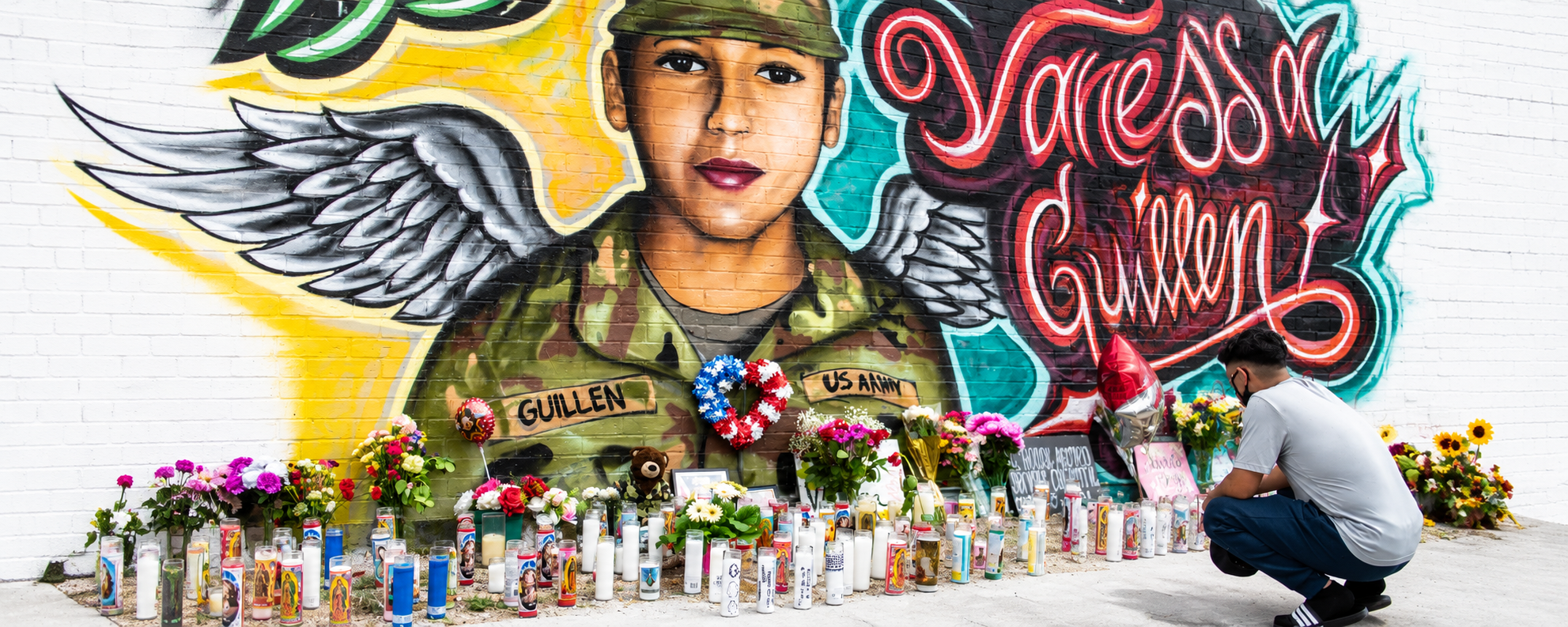
    In 2020, the case of Vanessa Guillen, a 20-year-old servicewoman who disappeared while on duty, gained publicity in the United States. She had previously told her family that she was being sexually harassed by a sergeant, that complaints against him by other female victims had been rejected, but that she would solve her problems herself. Two months later, the remains of her body were found. The killer was U.S. Army Specialist Aaron David Robinson; his girlfriend, Cecily Ann Aguilar, helped dismember the body and hide the remains. Robinson shot himself during his arrest, and Aguilar was sentenced to 30 years in prison.[8] The investigation concluded that the murder was a direct result of leadership failure and a climate of indulgence in sexual violence and harassment at the military unit. Fourteen other soldiers were disciplined.[9][10] As a result of the Vanessa Guillen case, sexual harassment was included as an offence in the Uniform Code of Military Justice in 2022.
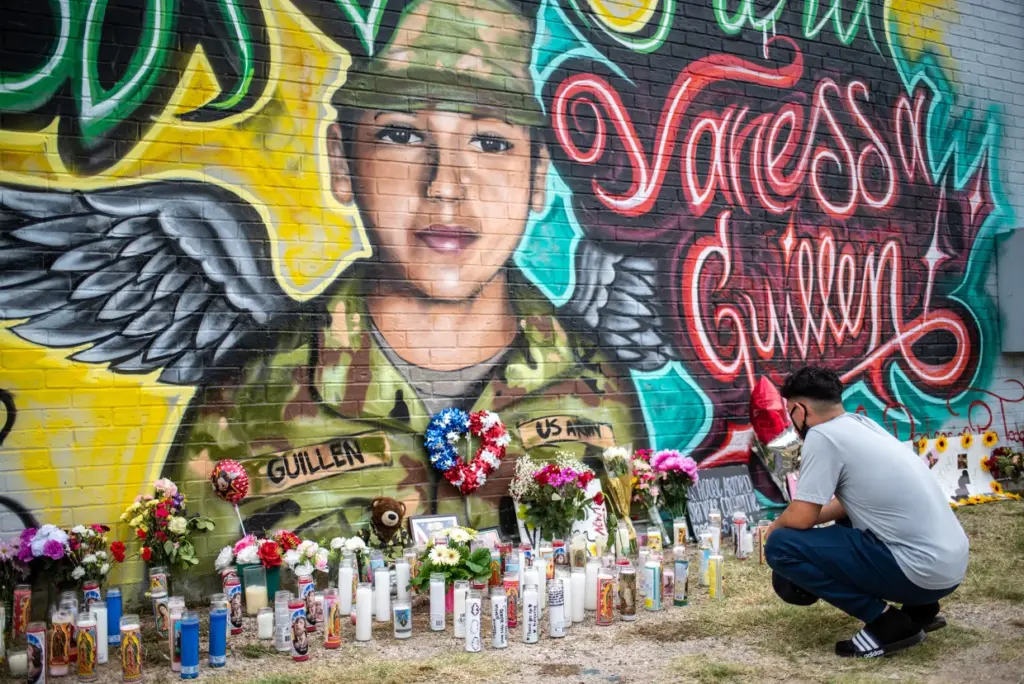
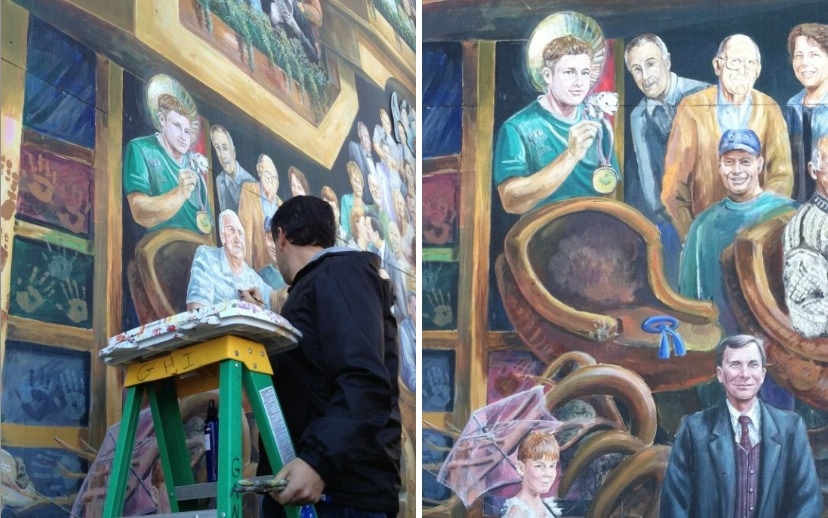
    Mural in memory of Vanessa Guillen

    In Canada, about a quarter of female service members experience harassment or violence during their careers, while the figure for men is about 4%. About three cases of sexual harassment or violence occur every day. After an independent study published a report on “a culture hostile to women and LGBT+ people in the military,” Canadian servicewomen and veterans filed lawsuits against the Ministry of Defense for two years (2016-2017). Many of them received financial compensation after a court decision. The problem of sexual harassment in the Canadian Armed Forces was declared a threat to national security. The Standing Committee on National Security and Defense of the Senate of Canada believes that a culture of conformity, hierarchy, unquestioning obedience to orders, and placing group interests above individual ones created an atmosphere conducive to sexual harassment and violence. To remedy this situation, it is necessary to influence this culture, not just increase the number of women in the army.[11] Between 2015 and 2021, Operation Honor was conducted to comprehensively study the problem and look for ways to solve it.

    In 2021, 13 high-ranking officers in Canada were simultaneously suspended, investigated, or forced to retire due to inappropriate sexual behavior. The military police did not disclose the cases on its own initiative, but answered questions from journalists.[12]

    According to a study by the Research Center for Humanitarian Problems of the Armed Forces of Ukraine (2011), 10% of women and 5% of men (mostly cadets of higher military educational institutions) experienced sexual harassment in the army.[13]

    In 2020, the authors of the study “Invisible Battalion 3.0. Sexual Harassment in the Military in Ukraine” talked to women who had experienced sexual harassment, sexual violence, sexual violence combined with physical violence, etc. There were cases of offenders damaging personal belongings and even using firearms in retaliation for refusing [intimacy – Editor].

    Sometimes, in cases of sexist jokes or other minor conflicts, the perpetrator might not understand why their actions were wrong, even if they had to apologize to the victim at the request of their superiors. Sometimes the victims themselves did not immediately recognize the unpleasant incidents as harassment or sexism, rather than just interpersonal conflicts.

    This brings us to the need for education on gender equality and anti-harassment. The Invisible Battalion project team developed a training course on Gender Equality and Combating Sexual Harassment in the Military, which is publicly available on the Prometheus online education platform.[14] By the beginning of 2023, more than 23,000 people had registered for the course (90% of them received certificates), and the Department of Military Education and Science of the Ministry of Defense of Ukraine recommended that higher military educational institutions and military structural units of higher education institutions include the course in their training plans for cadets.

    However, it is obvious that systematic harassment of subordinates, sexual violence, physical abuse, threats, and harassment cannot be interpreted only as a lack of gender education, but also must be punished accordingly. The researches also documented cases, as well as the fact that it is rather futile for victims to expect fair punishment for the offender. As a structure that was not ready before the war in Ukraine to recruit women into combat positions and provide them with uniforms, the army was also not ready to respond to sexual harassment. Such problems were sometimes not resolved, sometimes ended in physical conflict with the offender, and sometimes led to the dismissal of women from the ranks of the Armed Forces, thus reducing the combat capability of the army by one qualified specialist. The mechanism of resolving conflicts by appealing to the commander does not work when the offender is the commander himself. Victims usually did not consider the option of calling the general “hotline” of the Armed Forces of Ukraine because of the non-anonymity of such appeals and, accordingly, the risk of worsening their situation.

    At the time of the study, only one case of sexual harassment was known when the victim decided to speak publicly and name the offender. In 2018, Lieutenant Valeriia Sikal reported long-term systematic harassment by Colonel Viktor Ivaniv. She stated that when she was serving in military unit A1358, the head of the unit, using his official position, repeatedly tried to force her to have sex. The Main Department of the National Police in Vinnytsia Oblast opened a case of coercion to sexual intercourse. As of early 2024, a verdict had not been reached in the case, and Colonel Ivanov was temporarily promoted and transferred to the Ministry of Defense.[15]

    Among the cases that came to the research team’s attention, sexual harassment was most often perpetrated by higher-ranking individuals and without witnesses; most often, men harassed women, although this was not the only possible scenario. Most of the victims did not tell anyone about the sexual harassment and did not seek help; the project researchers were often the first people to whom the victims confided. If any witnesses were present during the harassment, they usually supported the offender or remained neutral, either by not intervening or by declaring that they could not influence the situation. Women, usually, were not offenders themselves, but they did not always support the offended.
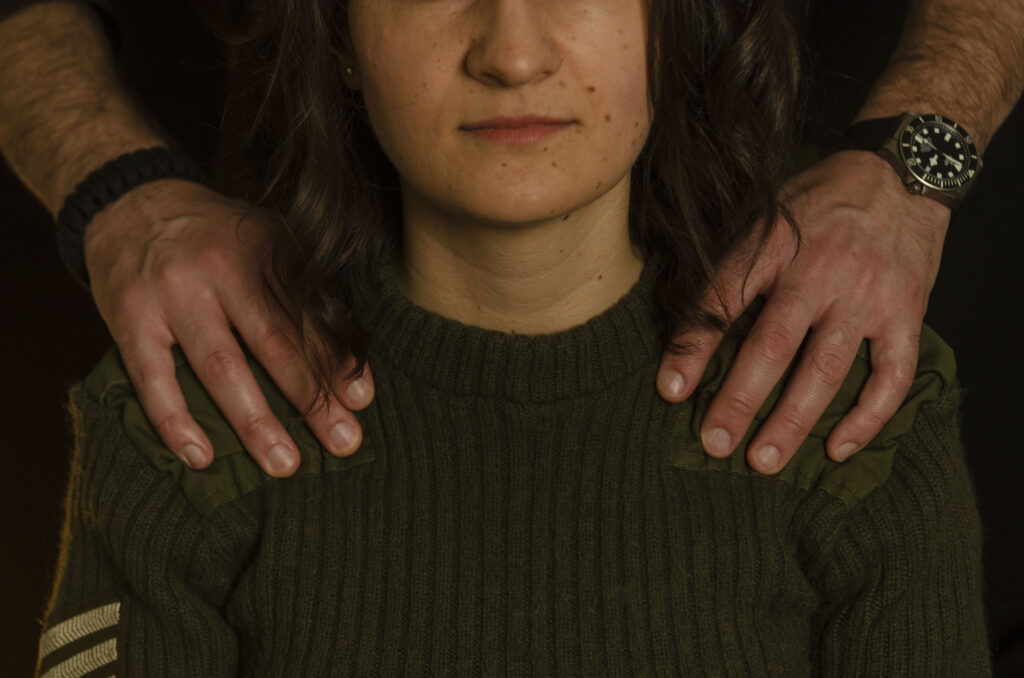
    Illustration to the study ‘Invisible Battalion 3.0. Sexual Harassment in the Military Sphere in Ukraine’

    After the study was published and the topic was brought to the public’s attention, servicewomen began to talk more about this problem. In 2021, Lieutenant Colonel Olha Derkach, an employee of the Chernihiv Regional Conscription and Social Support Center, stated that she had been harassed by her supervisor, Colonel Oleksandr Kryvoruchko, the regional military commissar. As in the case of Valeriia Sikal, a verdict in the criminal case has not yet been delivered.[16]
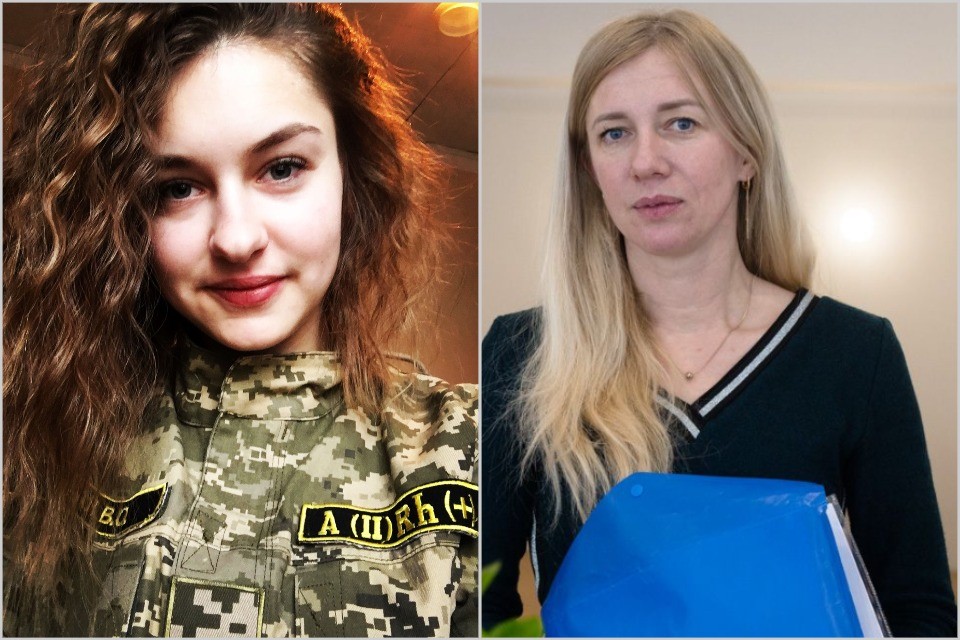
    Valeriia Sikal and Olha Derkach

    There have also been public statements in which victims did not name their perpetrators but shared their stories. Servicewoman Iryna Bazykina reported to the media that she had suffered sexual and physical violence. After a year of investigation, no criminal offense was found in the behavior of the perpetrator, and the perpetrator absolved himself by saying that “she likes hard sex.[17]

    In a podcast by the Women Veterans Movement published in early 2024, Svitlana, an aerial reconnaissance officer, shared her story, “I literally got into a fight or a struggle with an officer, a commander, but those people whom I considered friends in that unit, they just left, they came out to let the commander have a good time.[18]

    Communications officer and simultaneous interpreter Nadiya Haran went further and spoke about sexual harassment in the Armed Forces to the British newspaper The Guardian.[19] According to her, she left her unit because of a commander who harassed female subordinates and told them that if they refused to have sex with him, he would send their husbands, who were also his subordinates, to their deaths. The problem was brought into the international spotlight by Deputy Defense Minister Hanna Malyar, who promised to personally respond to the statements.[20] It was not possible to verify her promise because she was dismissed from her post a month later.

    Commenting on sexist jokes by a soldier in the 3rd Separate Assault Brigade, the Women Veterans Movement claims that “every harassment case goes unpunished.[21]

    In cooperation with the Institute of Gender Programs, the Women Veterans Movement, and the General Staff of Ukraine, the NGO Yurydychna Sotnia worked to develop a mechanism for responding to sexual harassment and gender-based violence in the Armed Forces of Ukraine.

    On October 28, 2021, at the Army Built on Trust forum organized by the Land Forces of the Armed Forces of Ukraine, Victoria Arnautova, Gender Adviser to the Commander-in-Chief of the Armed Forces of Ukraine, presented a draft mechanism for responding to sexual harassment and gender-based violence. 
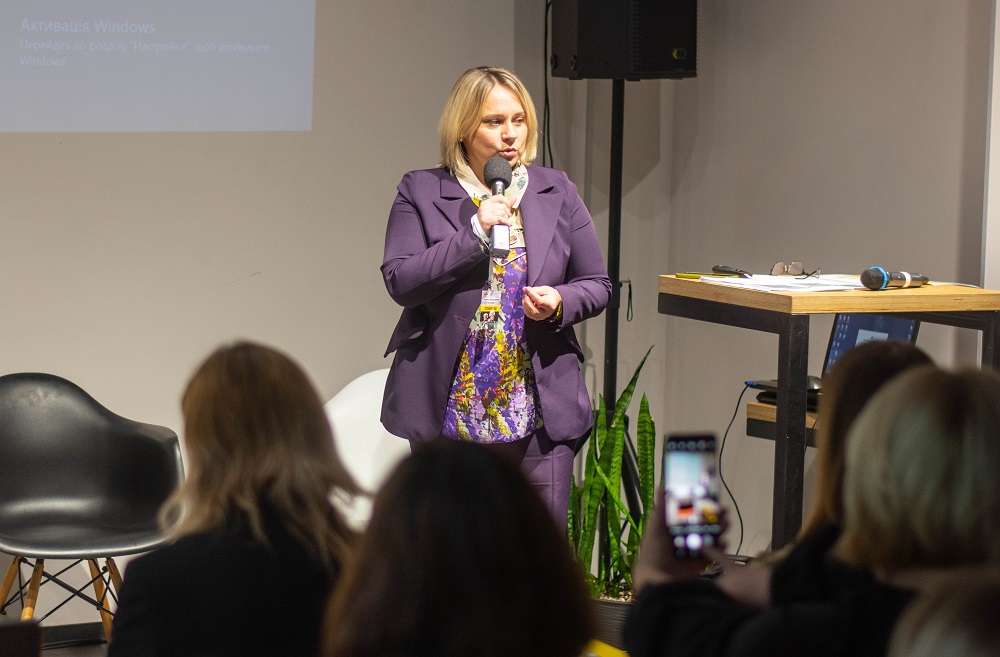
    Victoriia Arnautova presents a draft mechanism for responding to sexual harassment

    The mechanism envisages that the victim (or survivor) or a person who has observed inappropriate behavior reports it in person, in writing, or by phone to the hotline. A designated body (department of the Office of the Assistant Commander-in-Chief for Gender Integration), a designated person (gender adviser), or a commander receives the report, which is registered immediately. The next day, the affected person is referred for legal, psychological, and medical assistance (in compliance with personal data protection requirements). Following the report’s registration, an internal inspection commission is appointed, chaired by a representative of the designated body, and the same person also ensures the victim is protected from the influence of the offender. Based on the inspection or investigation findings, a decision is made to bring the offender to justice.

    As of the beginning of the full-scale war, the all the commands had agreed to the mechanism, but it was not adopted and no people were appointed to the gender integration unit positions in the Office of the Commander-in-Chief, who were supposed to perform the relevant duties. As of the beginning of 2024, the situation had not changed.

    What should a servicewoman or serviceman do if she or he is suffering sexual harassment right now? The YurFem Ukrainian Women Lawyers Association developed memo with general recommendations that does not replace individual legal advice in each case but gives an overall understanding of the next steps in the event of a threatening situation.[22]

    The first step is to ensure one’s own safety (leave the room, involve witnesses, etc.).

    The second step is to record the date, time, and place of the incident; record the position and name of the offender; and collect other information about the situation and evidence.

    The next steps are to get psychological, medical, and legal assistance, after which you can agree on your next steps with a lawyer.

    According to Article 110 of the Disciplinary Statute of the Armed Forces of Ukraine, in case of your rights being violated, you can file a complaint with both the command and law enforcement agencies.

    Sexual violence against servicewomen and servicemen is a military crime and is qualified, depending on the position of the offender, under the following articles of the Criminal Code of Ukraine: Article 426-1 “Excess of power or official authority by a military official”, Article 406 “Violation of statutory rules of relations between military personnel in the absence of a relationship of subordination”, or Article 405 “Threat or violence against a superior.” You should consult with a lawyer to determine the crime’s exact qualification, correctly prepare an appeal, and decide on the correct addressee of the appeal.

    NGOs such as YurFem, Charity Foundation Sylni, and Yurydychna Sotnia provide assistance to victims, although, based on the experience of Valeria Sikal, Olga Derkach, and Iryna Bazykina, they cannot theoretically nor practically ensure justice, which is the responsibility of the judiciary and law enforcement bodies.
  • Narratives in Ukrainian politics about the LGBT+ community

    Narratives in Ukrainian politics about the LGBT+ community

    Intro

    The institutional provision of equal opportunities for exercising human rights and freedoms by representatives of all social groups is an essential value of any democratic state. The fundamental principle of non-discrimination is underlying Ukrainian legislation and secures equal opportunities.

    This principle prohibits any discrimination against individuals or groups in a wide range of social relations. It also ensures equality of rights, freedoms, and opportunities; equality before the law; and respect for the dignity of every person. Accordingly, these provisions apply to and should be enshrined in national legislation and all regulations.

    More details about the legal (non-)recognition of homosexual relationships and some legislative restrictions on human rights related to sexual orientation have already been discussed in our previous materials.

    This text aims to analyze the narratives about the LGBT+ community in the external communication of national public figures, state institutions, and political parties. In addition, we analyze the legislative activities of members of the most prominent political factions represented in the Verkhovna Rada, their positions on certain bills aimed at improving the situation for or protecting the LGBT+ community, and homophobic statements and bills they initiated or supported.

    Why is this important? First, the messages and actions of the individuals holding such positions do not reflect their own values or positions but their positions as people’s representatives. Accordingly, to a certain extent, they broadcast public sentiments and “voices” of their constituents. Second, official communication and activities of national public figures not only represent but also, to a great degree, “set the tone” and influence public opinion. Their narrative about LGBT couples impacts the visibility of the whole community, its appearance in the media, and public attitudes toward it. Therefore, there is no doubt that the official communication of public figures, state institutions, and political parties is inextricably linked to public sentiment.

    This article analyzes the political narratives of 2019-2023.

    Position on the LGBT+ community in the parties’ electoral programs

    An analysis of the official position of political parties that are part the 9th Verkhovna Rada of Ukraine about the LGBT+ community should begin with the content and narratives of their electoral programs as the primary source of the declaration of their positions and ideological beliefs.

    Thus, the Servant of the People party’s program,  consisting of 16 sections and priorities as bullet-point statements in each, does not mention protection of LGBT+ rights. One of the paragraphs in the “National Identity and Civil Harmony” section states: “We will protect human rights and fundamental freedoms, ensure equal rights and opportunities for men and women in Ukrainian society.” The presence of such an item is better than the absence of any. However, a more specific item and the recognition of the problem of discrimination against LGBT+ people would be much better and increase its visibility.

    The electoral program of the Holos party includes 23 subsections and also does not contain specific references to ensuring equal rights and opportunities or providing adequate legal protection for LGBT+ people. However, in the first subsection, “What does Ukraine sound like?”, they repeatedly emphasize that their goal is to “return the person to the center of the state,” regardless of their ideological beliefs or other characteristics. However, the party’s program does not provide a specific mechanism for achieving this goal.

    The program of the European Solidarity party, like the above-mentioned parties, refers to equal opportunities for women and men and does not clearly mention protection of LGBT+ rights.

    The program of the Batkivshchyna party does not mention equal rights and opportunities for different social groups and the implementation of the principle of non-discrimination.

    Although as of September 2023, the program of the now defunct OPFL faction is not publicly available, the attitude towards the LGBT+ community that they had when they entered the Verkhovna Rada can be assumed from the words of former party member Yurii Boyko. In an interview, he clearly outlined the party’s position: “As for same-sex marriage, it is not even being discussed. This is such stupidity that is unacceptable for our Christian society.”[1]

    Thus, an analysis of the election programs of the political parties that won the majority of seats in parliament in the 2019 elections showed that advocacy for the LGBT+ community was neither a priority nor a separate area of work for any of the parties. It is worth noting that we found no overtly homophobic statements or positions in the programs analyzed. Some referred to implementing the principle of social justice and equality of all social groups in Ukraine. However, these ideas were presented as value guidelines rather than priority work areas with a specific mechanism of action.

    The existence of such references, albeit only at the ideological level, is undoubtedly better than the absence of any. However, it would be much better to specify the problem of discrimination against the LGBT+ community and actualize the issue of proper protection as a separate item in the program.

    It is quite clear why naming the problem of discrimination is necessary: as long as the problem is not stated and “highlighted,” it remains invisible to the majority of society. As long as the challenges posed by no legal recognition of homosexual couples as families are not being discussed, most of society does not even notice them. Accordingly, problems that are not verbalized and actualized cannot be solved.

    Membership of Ukrainian political parties in international liberal democratic associations

    The affiliation of a political party with international political associations, alliances, or organizations is one way, but definitely not the only way, to assess its ideological and value orientation. It is an indicator allowing us to evaluate whether a party is friendly towards the LGBT+ community, at least declaratively. One such association is the Alliance of Liberals and Democrats for Europe (ALDE), a European transnational political party that adheres to liberal democratic values and unites parties that share them.

    The Ukrainian political party Holos joined ALDE in 2020, the first parliamentary party of this Verkhovna Rada convocation to do so. According to Holos, to become a member of this association, a party must prove that it shares the values of liberal democracy, rule of law, tolerance, human rights protection, and the principles of a market economy. For its part, membership in ALDE provides access to networking with European parties with similar values and a European political elite.

    The Servant of the People (SP) party was the second Ukrainian political party to join the Alliance, in 2022. According to Olena Shulyak, the party’s chairperson, this decision was not spontaneous: “Joining the ‘political family’ of the ALDE party as a full member is one of the key priorities for the Servant of the People in international politics.” The issue of accession became especially relevant after Russia’s full-scale invasion. In addition to being an indicator of shared values and beliefs, membership in the association is now seen as an important political step that promotes better integration into the European political community.

    In addition to the fact that the ALDE’s unequivocal support for Ukraine’s sovereignty and integrity strengthens our country’s position in the international arena, the membership of two Ukrainian parties in ALDE also impacts decisions made within the Ukrainian political arena. For example, on May 28, 2023, ALDE adopted a resolution supporting the legislative initiative of Holos and SP MPs to submit a draft law on civil partnerships. This was the first international statement of this level calling for support for the draft law.

    Although this resolution does not de jure impose any obligations on Ukraine and is only advisory, de facto, it could influence the adoption of the draft law. The European community’s call to support registered partnerships for same-sex and different-sex couples demonstrates the importance of this issue for the Alliance and the European political community, which observes liberal democratic values. This Alliance position also legalizes the significance and relevance of this issue in Ukrainian society. For Ukraine, which is fighting for its place in this community, adopting the draft law is a logical and expected step for implementing European legislation into Ukrainian national legislation.

    Homophobic statements and legislative initiatives of individual party representatives

    Despite the fact that the programs of the above-mentioned political parties do not contain overtly homophobic positions, and some of the parties belong to liberal democratic associations, the positions of individual party representatives sometimes contrast. This is manifested in their homophobic statements, legislative initiatives, or unwillingness to support bills aimed at improving the situation of the LGBT+ community.

    Two draft laws submitted by SP MPs Heorhiy Mazurashu and Olena Lys on July 22, 2020, are vivid examples of how the positions of the party and its representatives diverge sharply. The first draft law proposes amending certain legislative acts on protecting the family, childhood, maternity, and paternity. In the draft, the authors define “homosexuality, pornography, sexual products, transgenderism” and introduce the concept of “propaganda of homosexuality or transgenderism,” although they do not yet define it. In addition, the authors propose replacing the word “gender” with “equality of rights and opportunities for women and men” throughout. In the explanatory note, the authors justify their proposal with the “danger” that “gender ideology” allegedly poses.

    The second draft law proposes amendments to the Code of Ukraine on Administrative Offenses regarding liability for propaganda about homosexuality and transgenderism. In the explanatory note to the draft law, the authors express concern about “aggressive propaganda of homosexuality and transgenderism aimed at destroying the family institution” as one of the “immoral threats of our time” as a justification for its adoption. In the note, they also misinterpret the concepts of gender and gender equality and view them as inherently “explicit or implicit propaganda of homosexuality and transgenderism.”

    At the same time, in his comments to Suspilne, co-author of the draft law Heorhiy Mazurashu notes that, generally, he is “far from thinking that they [transgender people and the LGBT+ community] should be treated in any way biased, or subjected to any discriminatory actions.”[2] Commenting on the draft law to Radio Liberty, he reiterates his “calm and civilized attitude towards people with different sexual orientations and gender identities.”[3] Mazurashu explains that he is concerned about the risks of “propaganda of homosexuality or transgenderism.” Therefore, he and his colleague propose introducing a fine of 1,000 tax-free minimum incomes (UAH 17,000) for individuals and 3,000 tax-free minimum incomes (UAH 51,000) for legal entities.

    Another draft law initiated Heorhiy Mazurashu proposes amendments to the Budget Code of Ukraine to prevent spending budget funds on promoting pedophilia, homosexuality, and transgenderism. In addition to Mazurashu, the group of initiators of the bill includes other members of the SP party Anatoliy Drabovsky, Serhiy Kuzminykh, Artem Kultenko; and non-partisan MP Viktor Myalyk.In the explanatory note to this draft law, the authors appeal to the government’s obligation to develop and protect the family institution. Other arguments are that “propaganda of homosexuality and transgenderism poses a threat to public 

    health,” leads to “violation of the right to freedom of scientific research,” and “violation of the right to freedom of expression and freedom of religion.” In conclusion, the authors argue that “homosexuality, transgenderism, and pedophilia destroy public morality.” As a solution, the MPs propose a draft law that would potentially strengthen protection of family, childhood, maternity and paternity and prevent budget expenditures promoting “pedophilia, homosexuality, and transgenderism.”

    In the comparative table to this draft law, the authors define what they mean by “pedophilia, propaganda of pedophilia, homosexuality, propaganda of homosexuality, transgenderism, propaganda of transgenderism.” They consider the production, distribution, and/or public use of products containing LGBT symbols to be a kind of “propaganda of homosexuality.”

    All of these draft laws were withdrawn from consideration. Human rights defenders note that their content is very similar to the narrative from Russian legislation, which considers “propaganda of non-traditional sexual relations” a crime and introduces a fine for it.[4] In particular, the human rights NGO Our World commented on the above-mentioned legislative initiative as “support to Russian policy” and a willingness to “stand under the banner of the Russian-led movement for traditional values.” Although they believe that the real chances of passing this law, even at the time of its submission, were close to zero, the very existence of such legislative initiatives poses certain risks. These narratives are inconsistent with the ideological guidelines declared by the party in its election program and with the basic principle of non-discrimination enshrined in national law. Such initiatives go against the European integration process and Ukraine’s international obligations to ensure equality of rights and freedoms and combat xenophobia and intolerance.

    In addition to the human rights community, some national public figures and institutions criticized the draft law. In particular, the office of the Ukrainian Parliament Commissioner for Human Rights commented that the initiative of the draft law on fines for “propaganda of homosexuality and transgenderism” contradicts constitutional norms and international legal standards and “aims to discriminate against members of the LGBTI community and violate their right to respect for honor and dignity.”[5]

    In response to this draft law, MP Inna Sovsun submitted an alternative one that proposes including in Ukrainian legislation a ban on funding programs and activities that contain signs of direct or indirect discrimination or intolerance against individuals and their groups, depending on the characteristics that such individuals or groups possess. In justifying the need to adopt the draft law, the author also mentions that her colleague’s draft law contains outdated, incorrect terms and promotes stigmatization and discrimination against people based on their sexual orientation and gender identity. However, this draft law was withdrawn from consideration like the previous ones.

    (Non)support for the draft law on civil partnerships

    Another way to check whether the actions and positions of party members are consistent with the party’s official position is to analyze their (non)support for draft laws aimed at protecting the rights of the LGBT+ community. The latest and probably one of the most visible draft laws in the field LGBT+ rights protection is the draft law on registered civil partnerships. Our previous publications have already discussed the importance of adopting this draft law and the opportunities the LGBT+ community may gain (Zavhorodnia’s first text for ERIM). In this article, we will consider in more detail Ukrainian politicians’ reaction to the draft.

    After a petition demanding to “legalize same-sex marriage” on the website of the President of Ukraine gained 25,000 signatures, MP Inna Sovsun of the Holos party registered a draft law on civil partnerships for same-sex and different-sex couples. The list of initiators includes 18 MPs: 7 from Holos and 11 from SP, including Oleksandra Ustinova, head of the Holos parliamentary faction, and Olena Shulyak, head of the SP party. At the time the draft law was registered, its author, assessing the chances, noted that “given the support of the two factions, adoption of the draft law is quite realistic.”[6] She also expressed special gratitude to Dmytro Gurin, a Servant of the People party member, who helped collect signatures from his faction’s MPs. The petition in support of the bill quickly gained 25,000 signatures.

    After considering the draft law at a Youth and Sports Committee meeting on March 7, 2023, the majority of committee members decided to support the draft law. The committee considered creating a new institution of civil partnerships as an important step towards European integration, so it recommended that the Verkhovna Rada adopt the draft law. A report by the Our World Human Rights Center notes that it was entirely unexpected that the committee chair, Andriy Kozhemiakin, a member of the Batkivshchyna faction, would support the draft law.[7] The report states that at the committee meeting, the MP said that although he supports Christian values, he perceives this draft law as an opportunity to “do something to move away from Russian bonds” and therefore supported this decision.

    The Committee on Ukraine’s Integration into the EU was the second to consider the draft law at a meeting and unanimously supported it. Among the MPs who voted for it were representatives of different political factions: Mezentseva (SP), Halaychuk (SP), Vintoniak (SP), Nalyvaichenko (Batkivshchyna), Klympush-Tsintsadze (European Solidarity), and Liubota (SP).

    The Committee on Digital Transformation was the next to support the draft law. In its expert conclusion, the Committee provided several recommendations for finalizing the draft and improvements for its implementation. The draft’s author, Inna Sovsun, expressed willingness to participate in further discussions on this issue.

    The Committee on Social Policy and Veterans’ Rights also supported the draft law. Among those present at the committee meeting who voted in favor were Tsyba (SP), Nikorak (European Solidarit), Strunevych (SP), Arseniuk (SP), and Babenko (Bila Tserkva Razom). In contrast, First Deputy Chair of the Committee Tsymbaliuk (Batkivshchyna), committee member Tymoshenko (Batkivshchyna), and subcommittee chair Ostapenko (European Solidarity) abstained.

    Position on Pride parade

    Another “litmus test” for better understanding whether the value of equal rights and opportunities is only declared in the party’s statutory documents or they are backed by actions is an analysis of the parties’ response to the Pride month that took place in Ukraine in May-June 2023. Among the largest political factions represented in the Verkhovna Rada, only Holos temporarily customized its logo to reflect the symbols of Pride, thus expressing support for the LGBT+ community. Other political factions did not react to Pride month.

    Political allies of the LGBT+ community

    In the fall of 2021, the Allies in Action Coalition recognized opinion leaders, activists, and politicians who publicly support diversity and inclusion. One of the seven nominations was “The Friendliest Politician,” which was awarded to Inna Sovsun, a member of the Holos party. The friendliest civil servant was former Ukrainian Parliament Commissioner for Human Rights Lyudmyla Denisova. In response to this, Sovsun said that she was pleased to receive such an award, but it also means that “the competition in this nomination is very weak.”[8]

    As of September 2023, the situation has not changed dramatically. On the webpage of the Civil Partnership Advocacy project created by the NGO Fulcrum, the list of public figures who support the draft law on civil partnerships includes only Inna Sovsun (Holos) and Dmytro Hurin (SP) from among all MPs.

    Conclusions and recommendations

    Thus, having analyzed the official positions of the largest political factions in the current convocation of the Verkhovna Rada, we conclude that promoting LGBT+ rights is still not a priority for any of the factions. In general, parties declare the equality of citizens as one of their values in electoral programs, but for the most part, it is an ideological guideline rather than a clear direction of work with a defined set actions to achieve specific results. That is, parties are declaratively tolerant towards the LGBT+ community but are not ready to take active steps to support it, promote its interests, and improve its situation.

    In addition, some party members fail to follow even this position, which is demonstrated by their homophobic legislative activities. The most striking examples cited in the article are the draft laws on “propaganda of homosexuality and transgenderism.”

    The draft law on registered partnerships, registered in 2023, has become a vivid litmus test for determining the values of MPs and the consistency of their actions with the party’s declared ideological beliefs. The positive results of the draft law’s consideration in four committees suggest its adoption is possible. Nevertheless, it is still awaiting consideration by the main committee.

    One more observation is the clear association of homophobia with Russian political culture after the full-scale invasion. It has become clear that the narratives of “homosexual propaganda and gender ideology” are rooted in Russia and are completely alien to the European community. Therefore, homophobia in Ukrainian politics is even more obviously perceived as a threatening rapprochement with the aggressor, while tolerance and protection of the LGBT+ community are one of the necessary steps towards European integration. Accordingly, we hope that the logical choice for MPs when considering the draft law on civil partnerships will be approximating our legal standards to international ones.

    This publication has been produced by Gender in Detail with the financial support of the European Union. Its contents are the sole responsibility of the author and do not necessarily reflect the views of the European Union.

    The Resilience Programme is a 30-month project funded by the European Union and implemented by ERIM in partnership with the Black Sea Trust, the Eastern Europe Foundation, the Human Rights House Foundation and the Human Rights House Tbilisi. The project aims to strengthen the resilience and effectiveness of war-affected CSOs and civil society actors affected by the war in Ukraine, including independent media and human rights defenders.


    [1] Being an ally. Who supports diversity in Ukraine and why. Focus, 30.11.2021.

    [2] We did it! My draft law on civil partnerships for same-sex and different-sex couples is already registered in the parliament and is designated number 9103. MP’s notes | Sovsun, 13.03.2023.

    [3] Situation of LGBTQ in Ukraine in 2023. Our World LGBT human rights center.

    [4] “Servant of the People” followed the footsteps of russian colleagues and intended to ban “propaganda of homosexuality and transgenderism.” Hromadske, 22.07.2020.

    [5]July 22 Verkhovna Rada of Ukraine registered the draft law “On amending the Code of Ukraine on Administrative Offenses regarding liability for propaganda of homosexuality and transgenderism” № 3917. Ukrainian Parliament Commissioner for Human Rights, 27.07.2020.

    [6] “Natures mistakes”. Why the draft law against LGBT propaganda was registered in the parliament and how human rights defenders comment? Suspline:news, 23.07.2020.

    [7] MP Mazurashu explained why he initiated “penalties for propaganda of homosexuality and transgenderism.” Radio Svoboda, 22.07.2020.

    [8] Razumkov, Boyko, and Poroshenko – on marijuana and gay marriages. NV, 12.07.2019.

  • Transgender People in Ukraine during the Full-Scale War

    Transgender People in Ukraine during the Full-Scale War

    Transgender people in Ukraine, like everyone else, risk every day being killed by Russian weapons. Unlike cisgender citizens, they face additional challenges, such as specific medical needs; transphobia in society, the media, and among loved ones; complications related to military service; etc. Trans people who were forced to become temporary migrants in other countries face a striking difference between the trans transition system in Ukraine and abroad, transphobia and misunderstanding in shelters, and lack of resources for survival. Yet they fight, volunteer, work, engage in art, go to rallies and marches in other countries, and continue helping Ukraine in any way they can.

    Like in any other group, among trans people there are also those who do not want to invest in winning. However, since this group is traditionally marginalized in any society, that is, alienated, transgender people often receive much more criticism for the actions of its specific representatives than happens in other cases. Non-binary and gender non-conforming people generally go unnoticed; on the one hand, this is good as they are thus less subjected to general hatred, but on the other hand, restrictions on their rights and opportunities are even higher than those of trans men and trans women.

    The Ukrainian trans community, of course, primarily seeks victory over Russia. In addition to the common desire of all Ukrainians to stop the rabid colonizer neighbor, trans people have a doubly negative attitude towards Russia. “The Russian World” uses transgenderism as one of the major factors of fear. The president of Russia often intimidated Russians with the image of transgender people (“transformers” in his words) to turn them against Ukraine and the so-called “collective West.”

    In July 2023, Russia passed a law completely banning any medical procedures for trans transition, for transgender people to adopt, change the gender marker in documents, etc. Similar laws have been passed in some U.S. states and in some African and Asian countries, and digging a little clearly reveals the Russian traces in that. Attempts to submit anti-LGBTQI+ and anti-trans draft laws were also made in Ukraine (Zavhorodnia’s article on politics 2023), but, fortunately, none of them made it to a vote.

    A Brief Chronology of Trans Issue in Independent Ukraine

    The first document regulating transgender transition in Ukraine was Order #57 in 1996. It allowed taking any transgender transition steps only from the age of 25 and provided for mandatory sterilization, a stay in a psychiatric clinic, and a medical board review. Without genital surgery and a humiliating public analysis by a group of doctors, it was impossible to get permission to change the gender marker in documents. The situation was complicated by the fact that there was only one commission in the country and people had to spend additional money on a trip to the capital to pass it.

    In 2011, the new Order #60 entered into force. In fact, it involved few changes. Transgender people also had to spend 30-45 days in a psychiatric hospital to receive a preliminary diagnosis, which was then confirmed or denied by a medical board. Based on commission results, a person gained the opportunity to perform surgical operations. A denial could be challenged in court.

    Usually, the commission considered vaginoplasty for transwomen and mastectomy and hysterectomy for transmen to be a sufficient number of operations. After the operations, the person went before the commission again and only then received permission to change their documents. In addition, there were a number of contraindications, in particular “sexual disorders,” which included homosexuality.

    Only in 2016, thanks to the active work of trans activists and the support of the Minister of Health Ulyana Suprun, a new trans transition protocol was approved based on orders #972 and #1041. This protocol mandated some medical intervention (usually hormone replacement therapy) and a psychiatric diagnosis, but a stay in the hospital is not required, and any family doctor can issue a certificate to a trans person to change their documents — there is no longer a single commission. Besides, now, with certain restrictions, transgender transition is also available for teenagers from the age of 14.

    Yes, the protocol is still far from perfect and there is still much work to do, in particular regarding recognizing non-binary people and implementing the 11th edition of the International Classification of Diseases (ICD). However, Ukraine abandoned forced sterilization earlier than some EU countries, and thanks to the inclusion of family doctors in the transition protocol, trans people can receive the necessary treatment quite quickly, without queues and months or years of waiting.

    Social Needs and Problems Facing Transgender People in 2022-2023

    During Russia’s full-scale invasion, the main issues facing transgender people have become very acute. In February-March 2022, trans people forced to leave Ukraine often faced discrimination and misunderstanding by the border services. Some border guards had never seen people whose appearance differs from the photo in their documents and does not correspond to the gender marker specified. Transwomen who did not have time to change their documents could be recorded as men fleeing mobilization, while many people heard for the first time of the existence of transmen. Victims of discrimination turned to LGBTQI+ organizations.

    The organization Gender Stream carried out a great deal of related work. Its activists advised border guards, helped people pass border control who had the legal grounds for doing so, and supported transwomen who had not yet changed their documents but were in the process and in communications with military enlistment commissions.

    Unfortunately, there were also cases of illegal border crossing by transwomen. The singer Zi Famelu illegally left for Germany and gave numerous media interviews about the terrible transphobia in Ukraine. She did not ask for help from any of the Ukrainian organizations that could solve her problems regarding documents, while her stories for the Western press involve numerous inaccuracies and exaggerations. Of course, transphobia does exist in Ukraine, but not at such a staggering scale as Zi describes.

    In total, non-governmental organization (NGO) Nash Svit (“Our World”) recorded 77 hate crimes based on sexual orientation and gender identity in 2022, of which six cases were described as transphobic. Mostly, this included violence by parents against transgender teenagers or young people, and cases of sexual violence against transgender women, physical attacks, and transphobic insults were also recorded. These were only the cases that victims reported to the organization’s monitors.

    Often, victims of transphobic violence do not know that crimes must be recorded or are so used to transphobia and abuse that they do not consider what happened to them to be a crime. In 2023, one of the largest cases was an attack on transgender soldier Helen Mark in Lviv on August 15. Ombudsman Dmytro Lubinets and LGBTQI+ organizations KyivPride and Gender Stream joined the case.

    At the same time, transgender journalist and military volunteer Sarah Ashton-Cirillo was appointed as the English-speaking spokesperson for the Territorial Defense Forces of the Ukrainian Armed Forces. This caused a huge wave of transphobic reactions on social media, in particular from Right Sector activists and less-known far-right groups. However, this appointment demonstrates that Ukraine, albeit slowly, is moving towards the supremacy of human rights and non-discrimination.

    In addition to right-wing radicals and some radical feminists always react to the visibility of transgender people. “Gender-critical” or trans-exclusive radical feminists (TERFs) hold the same transphobic views as conservatives and, sometimes, consciously or unconsciously support their views. For example, Maria Dmitrieva, leader of the largest radfem Facebook community Feminism UA (14,000 members), supported the content of military blogger Yevhen Karas, who is known for not only his homophobic and transphobic statements, but also his hatred of feminists, sexism, and organizing massive online attacks on female activists.

    In Ukrainian TERF circles, the concept of “trans docs” is popular, which is how participants call activism for transgender people’s rights, informing about transgenderism, or news related to it. Fortunately, they do not have as much influence on the country’s political situation and public opinion as, for example, in the USA, UK, and European countries. Most often, their activities do not go beyond social media, especially during the full-scale invasion.

    On the officially conservative side, several new players have appeared over the past year and a half. In addition to Karas, who is also a regular contributor to Censor.Net and Vsi Razom (“All Together”), transphobic rhetoric was promoted by the Freikorps volunteer unit on its YouTube channel, blogger Neautorka, Catharsis channel, the Association of Sexologists and Sex Therapists of Ukraine (did you expect to see a name like that on this list?), Aleksey Arestovich, Iryna Fedyshyn, and others. Some posts addressed the entire LGBTQI+ community, but many focused specifically on transgender people.

    Interestingly, all these resources mainly responded to news from abroad, for instance, many posts touched on American trans people and the U.S. laws that limit their rights. Also, Ukrainian conservatives were outraged by advertising campaigns involving transgender people in other countries, European prides and beauty contests, transgender characters in Western media, etc. During the full-scale invasion, Ukrainian LGBTQI+ organizations are engaged in humanitarian work, do not organize public events, and have become less visible; hence, conservative movements pay less attention to them.

    Meanwhile, attacks on activists mainly take place online. Demonized images of Edward Rees, Marharyta Kovalova, Michelle Karas, and others appear in the campaign materials of Ukrainian anti-trans movement figures. The main accusations look like the renewed rhetoric of American conservatives: transgender people are pedophiles who want to seduce and convert children into transgenderism and take away women’s rights. There are unique Ukrainian narratives as well: merging the LGBTQI+ movement with communism and claims that trans people work for Russia and seek the defeat of the Ukrainian army. The statements, of course, lack evidence. However, as I have already mentioned, when stories about transgender military personnel appear in the media, conservative bloggers start actively looking for ways to denigrate them and devalue their service.

    Trans* Ukrainians and the Army: How Trans* Status Affects the Issue of Conscription. Transgender Soldiers

    The number of transgender and non-binary personnel in the Armed Forces of Ukraine, as well as the number of LGBTQI+ military personnel in general, is unknown. Stories have recently appeared in the media of non-binary mortar person Antonina Romanova, transwoman Oksana Surchok serving in an assault unit, non-binary military member Kafa from the 93rd Mechanized Brigade Kholodnyi Yar, and others. Being openly trans in the military is hard for many reasons, and potential transphobia from colleagues is far from the most important ones. During service, it is not easy to continue hormone replacement therapy (HRT) and military personnel often take a forced break from treatment, which can have a very negative effect on physical and mental health. In addition, a transgender person may face problems when enlisting.

    In February 2023, Human Rights Center Nash Svit published the report “The Battle for Freedom. LGBTQ Situation in Ukraine in 2022,” which, among other things, mentioned the diagnosis F64.0 “Transsexualism” as a condition that exempts a person from military service. With “severe” gender dysphoria, a person is considered completely unfit. On the other hand, this diagnosis can mean unfitness in peacetime and limited fitness in wartime if these conditions are “moderately expressed with unstable compensation or compensated.”

    The “severity of expression” and “compensation” of these conditions should be determined by a special medical commission, for instance, at a regional psychiatric hospital. The next step is confirmation of the conclusion by a military enlistment commission. In practice, few hospitals have staff capable of conducting such an examination, and even more so, one should not expect expertise from the military enlistment commission. Before the start of the full-scale invasion, psychiatric departments in Kyiv and Odesa, which had a lot of experience working with transgender people, did not specify the severity of transgender expression in their medical reports.

    This report, published by numerous media outlets, caused a negative reaction, primarily from radical opponents. After all, the material was presented as if all transgender people were eager to leave the country and were using their diagnosis for this, whereas transwomen, transmen, and non-binary people fight and often face misunderstanding and discrimination during voluntary mobilization if their appearance does not match the gender marker in their passport.

    According to Nash Svit, there are trans people who fight while concealing their transgender status. They have already received documents with their preferred gender marker, are stealth (do not tell anyone that they have transitioned), and serve as a cisgender male or female. I am also aware of the story of a transgender man who volunteered for the army at the start of the war, and none of his comrades knew that he was a transgender person.

    Medical Needs and Issues of Transgender People

    Problems with medications are not limited to the military. Transgender people who stayed in Ukraine faced a shortage of hormonal drugs, especially at the beginning of the full-scale invasion. Most of the drugs disappeared from pharmacies as they are not produced in Ukraine and imports were limited. Currently, the situation has somewhat improved thanks to the established supply and support of international organizations such as Convictus and ILGA or Ukrainian LGBTQI+ organizations and initiatives bringing hormones to Ukraine on their own. This is a huge and complicated job since transgender diagnoses are not included in any state protection programs like care for HIV patients or people with disabilities. In addition, the Ukrainian transit protocol does not specify the names of drugs that should be prescribed to patients; hence, it is almost impossible to organize mass supplies of medicines to Ukraine at the international level.

    Many transgender people had to postpone officially transitioning and changing documents for several years because psychiatric hospitals did not accept patients during the COVID-19 lockdowns. This also led to the issues described previously, such as transgender women already being on HRT for some time still had male documents and could not evacuate. Another complication was added during the full-scale invasion: many friendly family doctors, psychiatrists, and endocrinologists who were both documenting the transition and consultations on HRT and preparing for operations left to go abroad – of course, not all of them, but many. Besides, already in 2022-2023, public organizations were conducting training in trans*specific medical work, but there is a lack of specialists. The cost of healthcare and medicines has significantly increased compared to 2021, making life very difficult for transgender people who lost their homes and jobs due to the war.

    Implementing ICD-11: Current Status

    In the 11th edition of the International Classification of Diseases, the diagnosis “Gender Dysphoria” or “Gender Nonconformity” was removed from the psychiatric disorders section and moved to the sexual health section. In essence, this is the depathologization of transgenderism, which can later lead to the adoption of laws on self-identification, that is, greatly simplifying the process of trans transition. Many countries in Europe and the world have begun working according to ICD-11 principles even before its introduction and gave transgender people the opportunity to change their gender marker in documents without a psychiatric examination. In Ukraine, ICD-11 implementation was supposed to start in 2022. It officially entered into force on January 1, 2022, but it does not work in practice yet. The Ukrainian medical system is to adapt to the new ICD by 2027.

    According to trans activist Inna Iryskina, “implementation of the 11th edition of the International Classification of Diseases does not require the mandatory update of clinical protocols to its diagnostic codes. These are two separate processes.” Iryskina, who works with the NGO Insight on processes to implement ICD-11, insists on developing a new protocol, although this is not mentioned in official documents.

    “Hypothetically, a situation is possible when the diagnosis of trans people will take place according to the 2016 protocol with a psychiatric examination and ICD-10 codes (with the same F64.0 ‘Transsexualism’), while in statistical reporting it will go under ICD-11 codes (‘Gender Nonconformity’).”

    Currently, according to Inna, the first draft of translating ICD-11 into Ukrainian is ready. In the future, various experts are planned to be involved in its finalization. Also, with experts’ participation, perspectives will be discussed and specific implementation plans developed. The Insight team joined these processes, which, however, will definitely not be fast, in particular because of the war. Still, the activist considers implementing ICD-11 as inevitable in Ukraine for Ukraine’s accession to the EU and NATO.

    Transgender Ukrainians Abroad

    Transgender people who left Ukraine after the start of the full-scale invasion face specific challenges that are different from the lives of trans people in Ukraine and from the situation facing cisgender refugees. Many of them return to Ukraine because they cannot overcome these problems. Even if people have lost their homes in Ukraine due to the war, they seek refuge in LGBTQI+ shelters in Kyiv and other cities as they do not find opportunities to comfortably exist abroad.

    In European countries, there is no centralized program to help LGBTQI+ refugees from Ukraine. Sometimes, they can get support from local organizations, such as a place in a friendly shelter or in an apartment with local LGBTQI+ people, but usually transgender people live with other refugees in shelters and hostels. In these conditions, they often encounter transphobia and violence, which is difficult to avoid since there may be no other place and local authorities are not always sensitive to transgenderism.

    Trans people under 18 or those forced to leave with their relatives for other reasons often have to live in the transphobic environment of their loved ones with no choice or possibility to escape. Refugee families share rooms or small apartments, and if parents have previously resorted to violence, the risk of abuse increases in such conditions. In the KyivPride community, I have observed several stories like this. Before the full-scale invasion, teenagers managed to enroll in universities and leave their abusive parents for another city, starting a transgender transition there. But in 2022, already having visible signs of hormonal changes, they again found themselves in the same room with their relatives.

    According to a Gender Stream study published in August 2023, there is a lack of understanding of intersectionality principles in the placement and care of Ukrainian refugees in Europe. In refugee camps, Ukrainians face transphobia both from their own people and from representatives of other nationalities forced to seek refuge.

    In addition, the European medical system significantly differs from the Ukrainian one, in particular with regard to transgender health. Local doctors do not always accept Ukrainian F64.0 certificates, and patients cannot get drugs for hormone therapy. For example, I had to stop hormone therapy three months after starting it when I ended up in Denmark as a temporary migrant. The Danish medical system is unfriendly to trans people, although the principle of self-identification for changing documents has long been officially introduced there. Still, in order to get therapy, both HRT and surgery, you need to wait for several months to several years: first, for an appointment with a psychotherapist, then for permission for surgical intervention and a place in a clinic. At the first appointment, a trans person can simply be denied continued treatment for gender dysphoria if they are considered “not transgender enough” or if they have mental disorders. This situation is true for other countries as well, in particular ones where right-wing parties and trans-exclusive radical feminists have influence in the parliament and government. The impossibility of continuing trans transition is often the reason why transgender people return to Ukraine, as well.

    Will Transgender People Come Back to Ukraine after Victory?

    As I said in the previous section, many transgender people have already come back home. Others come to Ukraine from time to time to, for example, visit their endocrinologists, get or buy hormonal drugs, or complete the process of changing documents. There are also people who do not plan to return under any circumstances because they have found more acceptable conditions for themselves abroad. For instance, trans women who crossed the border illegally at the start of the full-scale invasion will have no way to return, even if they wanted to. These trans people’s stories end with an application for asylum in host countries involving the prospect of later obtaining full citizenship.

    Conclusions and Consulting

    What is needed for more people to return and have the desire to live in Ukraine after victory?

    First, ICD-11 must still be fully integrated into our health care system. This will not only facilitate the transition process, but also help transgender people with accompanying problems to improve their quality of life. In the new classification of diseases, the attitude to mental health has also been modernized.

    Second, draft law #5488 should be adopted, which introduces the concepts of “hate speech” and “crimes based on intolerance” into Ukrainian legislation and is one of the conditions for Ukraine’s accession to the European Union. Transgender people around the world are one of the groups most vulnerable to such crimes, and Ukraine is no exception. If cases of transphobic attacks are investigated properly, aggression will decrease and transgender people will feel safer.

    Third, we need more friendly doctors who know how and are willing to work with transgender people. Unlike many European countries, where transgender health is cared for only in specialized gender clinics, any specialists can do that in Ukraine. But to do so, they need to receive special additional education, in particular, learning the principles of non-discrimination of transgender and non-binary people. This training is occasionally conducted by LGBTQI+ organizations, but there is no specialization at the state level. This is especially felt when it comes to psychiatric and surgical treatment. Therefore, I see the major direction of work with the Ministry of Health here: inclusion of trans issues in medical university programs and creating full-fledged professional development courses for doctors in cooperation with experts from trans organizations.

    Literature:

    Звіт про злочини на ґрунті ненависти за ознаками СОҐІ в Україні 2022 року (для щорічного звіту БДІПЛ / ОБСЄ). Правозахисний центр «Наш світ». 23 квітня 2023 року.

    Дослідження[A1]  становища ЛГБТІК+ біженців і біженок за кордоном. Gender Stream. 24 березня 2023 року. Research of the Situation of LGBTQI+ Refugees Abroad. Gender Stream. March 24, 2023.

    Битва[A2]  за волю. Становище ЛГБТК в Україні 2022 року. Правозахисний центр «Наш світ». 9 лютого 2023 року. The Battle for Freedom. LGBTQ Situation in Ukraine in 2022. Nash Svit Center. February 12, 2023.

  • Defend the Motherland without discrimination: LGBT+ people in the armies of the world and Ukraine

    Defend the Motherland without discrimination: LGBT+ people in the armies of the world and Ukraine

    Workplace diversity policies are not a whim but a way to help employees realize their professional potential to the best of their ability. This principle is especially true for the Armed Forces of Ukraine, which is engaged in active combat operations and does not have the luxury of “throwing away” human resources because of individual characteristics that are not directly related to performing duties.

    According to research, at least 3% of people in the United States identify as LGBT+, and 8-11% report homosexual behavior or awareness of homosexual attraction.[1] There is no such research available for Ukraine. Still, one can assume that the percentage of people with non-heterosexual orientation is not country-specific, so the proportion in Ukraine should be around the same.

    In Ukraine, homosexuality or bisexuality is not a condition for removal from service, and same-sex romantic or sexual relationships are not prosecuted and do not breach military law. Therefore, it can be assumed that homosexual and bisexual persons enlist in the Ukrainian army evenly in accordance with their percentage of the population. This means that at least 3% of the personnel of the Armed Forces of Ukraine (more than 9,000 people as of the beginning of 2022, before mass mobilization to counter the Russia’s full-scale invasion, and much more after it began) are homosexual or bisexual. Thus, they all are the target audience of potential anti-discrimination policies.

    The rights of LGBT+ military personnel in the EU and the U.S

    Since 2018, LGBT+ people have been free to serve in the military in all EU countries. NATO policy prohibits discrimination based on sexual orientation, and since 2002, it has extended benefits for military families to same-sex military families. Since 2019, NATO has had a Diversity and Inclusion Action Plan until 2023, focusing primarily on gender equality and nationality equality within the organization. The organization introduced the official International Day Against Homophobia, Transphobia, and Biphobia (May 17) in 2020.

    In 2021, NATO headquarters hosted the first internal conference on LGBTQ+ perspectives in the workplace.[2] Secretary General Jens Stoltenberg delivered a speech in which he noted that “every member of the LGBTQ+ community at NATO is a valued member of our staff and family.”[3]

    This inclusion was preceded by a struggle, first of all, for the recognition of the LGBT+ community as such. In this text, I will briefly focus on examples from the United States and Germany.

    American society was quite conservative after World War II, and media products that openly targeted homosexual men could not be disseminated. Therefore, health and fitness magazines targeted the audience by publishing visual materials depicting male bodies. In 1956, the Finnish artist Touko Valio Laaksonen submitted his drawings to Physique Pictorial magazine and signed them “Tom.” In 1957, they were first published under the pseudonym “Tom of Finland”, invented by the editor. Since then, Tom’s work has become iconic and greatly influenced queer culture in general and erotic art. Tom painted erotica with men of his liking: tall, strong, engaged in physical labor, in a police uniform, or the outfit of a sailor or a soldier. His works influenced the self-awareness and imagery of the homosexual community, previously dominated by male femininity. They also probably indirectly contributed to the inclusion of the LGBT+ community in power structures.


    Tom of Finland. Untitled. 1974

    Simultaneously, as part of the human rights “track”, Vietnam War veteran Leonard Matlovich became the second openly gay person to come out after Harvey Milk. Being white, Matlovich started with anti-racist activism and later realized the similarities between racial and sexual orientation discrimination. He came out in 1975, first to his superiors and then to the media, making the front page of The New York Times and the cover of Time.

    At the same time, he had to defend in court his right to remain in the army. Initially, he was offered to stay on the condition that he would never practice homosexuality again, which Matlovich did not agree to. The trial lasted until 1980, and Matlovich eventually won – he was reinstated and even promoted. In return, the army offered him to resign with financial compensation. Given the risks of being discharged again for another arbitrary reason and a possible appeal to the conservative Supreme Court, Matlovich chose to accept the money. During his military retirement, he went into business and continued to engage in activism, including fighting for the rights of HIV-positive people, which he was himself since 1986.

    In 1993, the anti-homosexual personnel policy was somewhat eased by introducing the compromise principle of “Don’t ask, don’t tell.” It was assumed that closeted homosexual and bisexual men could serve if they remained closeted, and their superiors could not question or provoke them to come out. This policy was repealed only in 2011, and only then did homosexual and bisexual people gain the opportunity to be open during their military service.


    The cover of Time magazine with Leonard Matlovich. 1975

    In Germany, the LGBT community’s struggle for recognition, particularly in the military, also has a long history, burdened by 12 years of Nazi dictatorship. The biopolitics of the Third Reich were not limited to anti-Semitism and racism; they included strict health and family reproductive behavior requirements. In general, even before the 1930s, “immorality” and conspiracy were often equated in society, and gays were described in the same negative terms as Jews. Section 175 of the 1871 Criminal Code, which explicitly criminalized sexual acts between two men, was amended in 1935 to cover all homosexual behavior, including dating and flirting. Often, SS officers disguised themselves as gay to catch real ones. Between 1933 and 1945, more than 100,000 people were arrested under the new edict of Section 175. After the fall of the Third Reich and the release of people from concentration camps, the conservative Adenauer government came to power, which did not seek fundamental changes, so people from this group were repeatedly sentenced to prison. In the GDR, homosexuality was decriminalized in 1968; Germany abandoned the Nazi version of Section 175 in 1969, but it was wholly repealed only in 1994. A long struggle for the recognition of rights preceded the repeal.

    Society’s conservatism influenced the official policy of the Bundeswehr. It was believed gays in leadership negatively affected morality and posed a security threat. In 1984, General Gunther Kissling was forced to resign because of suspicions of homosexuality. Discrimination at lower levels was much more widespread and less publicized.


    Extract from a forced medical examination, which indicates a ‘ban on promotion’. 1987

    Nevertheless, the community’s struggle for its rights continued, including in court. In the late 1990s, at least two German soldiers, Winfried Stecher and Werner Buzan, tried to defend in court their right to serve.[4]

    It was only in 2000 that the Bundeswehr allowed women to serve (earlier, they could only serve in medical corps) and openly gay people to hold leadership positions. In 2002, the unofficial group Queer BW was founded to demand an official apology and rehabilitation for those affected by this discriminatory policy. They had to wait 18 years for an apology, until 2020.[5] At present, service members who experienced harassment during their military service can seek compensation for the harm they endured.


    The logo of the Queer BW initiative

    LGBT+ military personnel in the world’s armies

    Latin American countries have not yet reached the top of inclusivity indexes, but they have been making rapid progress in recent years in the rights of the LGBT+ community. Pride in São Paulo, Brazil, is considered the largest in the world, and the marriage rights of same-sex couples in the military are ensured.[6] However, Brazilian military law prohibits sex in the service, as such. In Mexico, homosexuality has been decriminalized since the second half of the 19th century, and homosexuals have been allowed to serve in the army since 2012. However, domestic homophobia in these countries is still a significant problem. On the other hand, Argentina is a champion of LGBT+ rights in the region, which lifted the ban on homosexuals serving in the military in 2009.

    China’s policy of inclusiveness concerning LGBT+ in the military is unclear, and information on this topic is partially limited.[7] However, it is known that the Chinese army’s personnel policy seeks to attract as many citizens as possible to serve, and it is likely that closeted homosexuals are fully employed, while open homosexuals risk dismissal.

    Conservative and homophobic countries in Asia and Africa cannot tout inclusion in the military: in Uganda, homosexuals are potentially subject to the death penalty; in Iran, homosexual behavior often entails forced transition to the female gender.

    LGBT+ military in the USSR and in Ukraine

    After the fall of the tsarist regime, the new Soviet government discarded all imperial criminal law, particularly prosecuting homosexual behavior, following the German model. At the same time, the attitude towards LGBT+ people in the Russian Empire was conditionally tolerant for those times, without high-profile criminal trials (recall the Oscar Wilde trial in the UK). For public and/or influential people, public intolerance was limited at best to rumors and at worst to administrative measures (dismissal from office, expulsion from the capital). Criminal trials concerned only ordinary people and were initiated mainly based on third-party complaints.

    The new Bolshevik government moved beyond this moderate intolerance: through the direct abolition of imperial legislation, the decline of the church’s influence, and a general attitude of emancipation and liberalization in gender and sexual issues. The proclaimed gender equality and affirmative action of “women’s departments,” the legalization of abortion, the “glass of water theory” that separated sex from love, and the development of a system of “children’s hearths” (extended-stay kindergartens) were naturally accompanied by a more tolerant attitude toward homosexuality.

    Over time, the emancipatory program of the first years of Soviet rule began to wind down gradually, and in 1933, the USSR criminalized homosexuality again. The article of the criminal codes of the Soviet republics entitled “Sodomy” provided for punishment for sexual relations between men. At the same time, the prison world developed practices of establishing hierarchy through sexual domination and ritual impurity attributed to victims of such domination and to the objects of prison life they touched. These firmly entrenched negative associations with homosexuality. Following a series of camp uprisings in the early 1950s and the relative liberalization of Soviet policy after Stalin’s death in the second half of the 1950s, the Gulag system was gradually dismantled, with large numbers of prisoners released and reintegrated into society. The homophobia they brought with them from the prison environment quickly spread further.

    The Soviet army did not explicitly ban homosexual men from service. However, those convicted under the relevant criminal article were not drafted into the military, and confessions of homosexuality to a medical commission could in practice be qualified as a psychiatric disorder and exempted from service. Nevertheless, closeted homosexuals apparently joined the army on a general basis. Little research has been done specifically on this topic because of its great taboo, but it is logical to assume that in combination with hazing (a practice of bullying in the army that is extremely common everywhere), the slightest hint of homosexuality was likely to be punished at least informally.

    In independent Ukraine, criminal penalties for “sodomy” were abolished in 1991. The legal framework of the Armed Forces of Ukraine, as the successor to the Soviet one, also does not contain explicit prohibitions to serve. In 2016, Ilovaisk veteran Oleh Kopko was the first person to come out in the Armed Forces of Ukraine. At that time, everything was limited to an article in the media as part of the “Tolerance Journalism” project.[8] The coming out went unnoticed by the public. The second coming out in the Armed Forces of Ukraine in 2018 got better coverage. Viktor Pylypenko, a veteran of the Donbas Special Forces Battalion of the National Guard of Ukraine, did it. During Anton Shebetko’s photo exhibition “We Were Here”, dedicated to LGBT+ combatants, Viktor gave a video interview in which he talked about himself.[9] The same year, the Union of the LGBT military was formed. The following year, a column of LGBT+ military personnel and their supporters participated in the Equality March in Kyiv.[10]


    Oleh Kopko


    A column of LGBT military personnel at the 2019 Pride

    The union makes more than a dozen different demands, including legal recognition of same-sex partnerships and inclusiveness of the LGBT+ community in army regulations and statutes. The need to regulate the rights of the partner in the event of a servicemember’s death has become more urgent during the full-scale war. In 2022, a petition to the President of Ukraine received 25,000 votes and was considered.

    Article 51 of the Constitution of Ukraine explicitly defines marriage as “based on the free consent of a woman and a man,” and it is impossible to amend the Constitution during martial law, so marriage equality will have to wait at least until the end of martial law.

    Despite that, there are no obstacles to introducing registered civil partnerships, a close analog of marriage. The relevant draft law, No. 9103, was registered in the Verkhovna Rada and is under consideration. However, the Ministry of Defense of Ukraine does not support it, citing Article 51 of the Constitution of Ukraine and the Internal Service Statute of the Armed Forces of Ukraine, which do not prescribe commanders to register a couple where one or both partners are military personnel. The ministry did not specify the barriers to improving the statute. The ministry also stated that there is no data on the number of servicemembers who cannot officially formalize a same-sex partnership.[11]

    At the time of the study, there was a de facto ban on transgender people serving in the military. According to the 10th version of the International Classification of Diseases (ICD-10), which is in force in Ukraine, transgenderism is classified as a personality and emotional disorder (item F64 – “gender identity disorder”). According to Article 18 of Annex 1 to the Regulation on Military Medical Examination in the Armed Forces of Ukraine, personality and emotional disorders F50-F69 are grounds for declaring a person unfit or partially fit for service.[12] However, a transgender person may still serve in the military before they begin their transgender transition and receive the diagnosis. Starting January 1, 2022, the World Health Organization recommends switching to the new ICD-11 classification, where transgenderism is moved from the group of mental disorders to the sexual health conditions called “gender nonconformity.”

    In Ukraine, transition to the new classification at the time of this text has not happened yet, and the relevant changes to the regulations have not been made. Partial fitness for service in wartime allows transgender people to serve in the army. As far as the author knows, there are such cases.

    People diagnosed with HIV are officially recognized as unfit or partially fit for service under Article 5 of Annex 1 to the Regulation on Military Medical Examination in the Armed Forces of Ukraine.[13]

    The problem of homophobia, biphobia, or transphobia in the Armed Forces of Ukraine is being recognized gradually and slowly. Back in the early 2000s, for example, the official response of the Ministry of Defense to an information request from NGO Nash Svit stated, “There are currently no psychological support programs for gay and lesbian servicemembers in the Armed Forces of Ukraine due to the absence of this problem […] As for positions related to personnel training and promotion, homosexuality can be considered as a limitation in conjunction with other moral and business qualities of a serviceman.”

    However, the response to later requests was profoundly different, in particular in 2017 of the Main Department of Moral and Psychological Support of the Armed Forces of Ukraine: “As part of legal training of the personnel of the Armed Forces of Ukraine, issues are mandatory related to observing the rights and freedoms of servicemembers, the procedure of military service, as well as the mechanism for ensuring social and legal guarantees for these categories of Ukrainian citizens. It should also be noted that the State Program for the Development of the Armed Forces of Ukraine until 2020, approved by the Presidential Decree No. 73/2017 dated 22.03.2017, provides for the necessary conditions for a gradual change in the mentality of the military personnel of the Armed Forces of Ukraine based on European values. In order to implement the above, it is planned to amend the legislation of Ukraine to eliminate any form of discrimination in the military service.”[14]

    Research on the LGBT+ situation in Ukraine’s military service

    In early 2022, I conducted a mini-study of the situation for LGBT+ military personnel in Ukraine. It was the first study in Ukraine to focus on this issue, as the movement of LGBT+ servicemembers only recently emerged. However, the topic of unlawful treatment of colleagues due to homophobia or transphobia was raised by respondents of the study “Invisible Battalion 3.0. Sexual Harassment in the Military Sphere in Ukraine”, which involved one homosexual man and one transgender woman who ended their military service before transition. Back then, the respondents named problems, among others, such as harassment and prejudice against servicemembers by colleagues based on their sexual orientation and gender identity, in particular, a noticeable deterioration in attitudes toward a non-heterosexual person after coming out without any other reason for the deterioration, demonstratively unaddressed threats, and homophobic attitudes toward people suspected of homosexuality due to a lack of visible sexual attention to women.[15]

    As part of the 2022 study, I conducted 10 interviews with 7 men and 3 women who belonged to the LGBT+ community and were active military personnel.[16] The respondents reported that they had personally experienced homophobia and had heard of such cases. The research methodology did not allow us to establish the actual prevalence of such cases. Still, subjectively, the respondents noted them as common, as a general norm of attitudes towards LGBT+ people. The high level of homophobia, low understanding of what homosexual orientation is, and low level of general culture create at least some discomfort in the service.

    And then you go to the canteen at lunchtime. Everyone looks at you and says, ‘Oh, it’s him, it’s that one.’ And every single day, I eat and they point at me, and they say something about me, and I hear it. Then, in the smoking room, they ask such slippery questions as ‘and what?’, ‘and who?’, like trying to surface some kind of truth, but it’s my personal business whether I want to share it or not. But I’m generally irritated that they exposed me.” (Respondent 1)

    They said ‘this is how you discredit the Army, you demonstrate to others that everyone here is like that.’” (Respondent 6)

    Otherwise, a person may face dismissal, physical violence, and even incitement to suicide. The lower a soldier’s rank, the harder it is for him to be open about his orientation. Respondents do not recommend conscripts and other lower-ranking soldiers disclose their orientation at all, advising them to delete personal data from their phones, etc. Respondents now perceive homophobic problems as almost unavoidable after coming out. The military personnel responsible for moral and psychological support are currently unable to systematically provide qualified assistance to LGBT+ people due to their low general qualifications, overload with paperwork, and lack of knowledge about the specifics of the LGBT+ community, even if they want to help.

    “And if it happens that everyone is against it, well, I’m putting it mildly, if the unit commanders don’t approve it, the department and so on, it is very difficult. It will be very, very hard, and no one will help you with this issue.” (Respondent 3)

    “But I will say this, if there was direct harassment, well, I probably wouldn’t have lasted long. I would have started to break down.” (Respondent 4)

    “What exactly will happen: he can be beaten, he can be humiliated, he can be humiliated in front of the whole platoon, he will simply not be able to live here, he will be verbally insulted. I don’t know… I just haven’t encountered it directly, but, in principle, I understand from what other guys say about what they would do to a gay man – it’s just horrible.” (Female Respondent 7)

    Inclusivity for LGBT+ people in the military workplace

    The Hague Center for Strategic Studies defines inclusion as a guiding principle that maximizes the benefits and minimizes the risks of diversity.[17] It is the best option among other guiding principles compared to acceptance, tolerance, exclusion, and persecution. The Center identifies the following types of inclusive policies:

    • Leadership, training, code of conduct. The top-down approach works best in the army because of its hierarchical nature. Policy coming from the leader counteracts the risks of harassment. Mutual respect should be explicitly stated in the statutory documents.
    • Support networks and mentoring. Associations that provide support to their members can be a resource. Such associations may even be funded from the state budget in some places.
    • Combating discrimination. The prohibition of discrimination based on sexual orientation and gender identity should be explicitly stated and enshrined in law.
    • Recognition of relationships. The state should recognize same-sex relationships through the institution of marriage and/or registered partnerships. This point is especially relevant for today’s Ukraine, where active hostilities are taking place.
    • Recognition of gender. Transgender individuals may wish to have their gender officially recognized by the state and other institutions, including the army. Procedural issues related to changing documents, access to hormone replacement therapy, and surgical sex reassignment procedures should be consistent with the regulatory framework and internal logic of military service.

    The Center notes that these practices are currently being implemented in different armies around the world in an unsystematic manner and are not tested for effectiveness, so it is difficult to identify any countries whose best practices are worth emulating. In contrast, the center’s research team formulated three strategies to provide a more focused vision.

    • Mainstreaming – developing new inclusion policies and increasing the inclusiveness of old policies
    • Managing – dedicated effort and an accountability approach
    • Measurement – tracking and evaluating progress

    In 2014, the Hague Center for Strategic Studies ranked the armies of 103 countries in terms of inclusiveness towards the LGBT+ community. Ukraine was ranked 52nd in this index (the study was conducted one time, so the index has not been updated). New Zealand ranked first, followed by the Netherlands, the United Kingdom, Sweden, and Australia. According to the study, including LGBT+ people in the military correlates with the degree of human development and indicators of democracy and, of course, with the general public acceptance of the LGBT+ community. In some countries, such as Croatia, Israel, or South Africa, LGBT+ people are better accepted in the military than in society at large.

    Illustrations: Tom of Finland, Time, Deutsche Welle, Queer BW, Radio Liberty, Suspilne, Hromadske.

    This publication was prepared by the expert resource Gender in Detail with the financial support of the European Union. Its contents are the sole responsibility of the author and do not necessarily reflect the views of the European Union.

    The Resilience Program is a 30-month project funded by the European Union and implemented by ERIM in partnership with the Black Sea Trust, the Eastern Europe Foundation, the Human Rights House Foundation and the Human Rights House in Tbilisi. The project aims to strengthen the resilience and effectiveness of war-affected CSOs and civil society actors affected by the war in Ukraine, including independent media and human rights defenders.

  • How Ukrainian Feminist and LGBT+ Organizations Work during the War

    How Ukrainian Feminist and LGBT+ Organizations Work during the War

    Translated from Ukrainian by Natalia Volynets.

    “Being asked “What kind of a feminist am I now?” I say I am a practical one.

    A situationally-practical one.”

    Svitlana Dubina, Vis

    The escalation of the war and the beginning of the Russian Federation’s full-scale invasion of Ukraine has changed the daily lives of every one of us. From Kharkiv to Lviv, from Kyiv to Mariupol, from Zaporizhzhia to Vinnytsia — we are forced to quickly change our plans, daily activities, and usual worldview.

    NGOs, feminist organizations, and communities dealing with LGBT+ issues involve people who constantly counteract violence, inequality, and discrimination.

    The war has intensified these issues while revealing new obstacles and creating new challenges.

    We talked with Ukrainian feminist and LGBT+ organizations to hear about what they are doing now and how they can be supported.

    Feminist Workshop

    Western Ukraine has become a refuge for many people. Evacuation trains carried the most vulnerable population groups, covering thousands of kilometers to get them from constant explosions and rocket attacks to relative safety.

    Hospitable Lviv, which is usually associated with old buildings and the Rynok Square impregnated with the aroma of coffee, seems to have been centered around the train station during the war. People came here from the east of the country, from here they went to Poland, and here volunteers met people with hot food.

    The Feminist Workshop has been operating in Lviv since 2014. This non-governmental organization (NGO), which enhanced the formation of the feminist community in Lviv, is now widely known. In peacetime, its employees were involved in educational activities among teenagers, filmed a video blog, and organized fem schools.

    Back in 2019, the Feminist Workshop started a dialogue on the complexity of the militarization perception through a feminist lens. The “(ir)relevant” project analyzed and criticized various forms of violence and its counteraction options under total militarization. Today, this position remains relevant, and the activists focus on direct assistance to women with children and elderly women, and joined the information war.

    First of all, this means providing housing for women facing difficulties, as well as for feminist activists who were forced to evacuate to Lviv. Finding housing for a long time period is very difficult as the city is crowded, but the women working at the Feminist Workshop created a fem-apartment, where one can live for free for up to six months.

    Ivanka, one of the volunteers who recently joined the team, helps take care of children. It is psychologically difficult for women to pay enough attention to their children and, at the same time, not to be in constant stress. In addition, they need to address numerous issues that arise during resettlement — finding housing and work, paperwork, and humanitarian assistance, all of which is much easier to do when there is someone to leave your children with so that they are played with and taken care of.

    The Feminist Workshop also pays attention to older women, which is another vulnerable group with more disabilities. Age gradually affects them and they may have limited work options (if any) or face health issues, and, hence, they need medications and care. The elderly are physically unable to stand in long queues for humanitarian aid or similar things; therefore, through cooperation, the women organized to provide elderly women with necessary items. In addition to food, this includes daily support, if needed, networking, and emotional support.

    These busy activities require constant support. If you want to join as a volunteer, you can write to the team. You can also donate to support the projects and humanitarian aid by following the link.

    Women’s Perspectives

    Another team that has always operated in Lviv is Women’s Perspectives. Registered in 1998, this was one of the first feminist organizations in Ukraine. During the entire period of its work, it has implemented over 30 projects and assisted more than 5,000 people.

    The organization’s priorities include gender equality, combating domestic violence and human trafficking, and supporting women’s and human rights organizations. The priorities have not changed since the beginning of the full-scale war, unlike the forms of their manifestation and organization.

    Almost immediately at the beginning of the war, the team found a large room, provided by business owners. The typical office center has turned into a shelter for women and children. They can spend the night here before going further, or stay longer, if needed. They can get medicines and food or psychological counseling (for both adults and children). Importantly, children have one more option: non-formal education classes. The team realizes that a large number of people staying in one place are difficult not only for the hosts, but also for the displaced people themselves. Therefore, the team redirects them to safe regions in Ukraine that are not as densely populated as Lviv, and transfers them to a shelter for internally displaced persons.

    As the war progresses, the number of shelters seems to decrease. It is becoming increasingly difficult to find humanitarian aid or housing. Although some cities (such as Kyiv) have become safer compared to February, a large part of the country is still a dangerous combat zone. Dnipro, Kharkiv, Kherson, and Mykolayiv are frequently shelled, and it is unsuitable to return there, especially for those with children, and many people have no home to return to. Aware of these new war challenges, which will not simply disappear, Women’s Perspectives wants to create two more shelters. They will differ from the existing one in that they will function not as temporary shelters, but as long-term and comfortable shelters for women with children who cannot return home.

    The organization requires facilities, appliances, and medicines for displaced people. To donate, please follow the link.

    Lviv is now crowded and busy. Organizations, associations, and entire cultural projects are being relocated here; humanitarian goods pass through Lviv; and people rest here before crossing the border and try to plan their further lives.

    Insight and “Marsh Zhinok”

    The NGO Insight and the Marsh Zhinok (Women’s March) initiative are also active during the war. Insight has always supported the LGBT+ community, which is its major task that is still relevant today. However, before the war this was mostly with an informational support blog; now there is a whole set of issues on the organization’s Facebook page, including searching for shelter, medical and psychological assistance, and so on. There was established cooperation prior to the war, like support with trans-transition, but now all these processes face new challenges.

     Marsh Zhinok has never positioned itself as a volunteer organization, but exclusively as a feminist initiative about women and for women. Its work relies on this principle and now, though many consider assistance a volunteer activity, the representatives themselves talk about it as something that they simply must provide.

    From their first days, the organizations have been working at a crazy tempo. Two lines were set up to provide help and psychological support: one for the LGBT+ community and the other for women. They offer crisis psychological assistance and psychological consultations, for which they created simple application forms, as well as consultations on legal issues, including regarding lost housing, paperwork, going abroad, etc.

    “From the first days of the war, we started looking for a place for shelters in the west of Ukraine, where people could spend a night or stay longer, get necessary things and medicines. Currently, there are three such spaces, two in Lviv and one in Chernivtsi,” Taisiya Gerasimova says.

    There are seven people on the team now and, in addition, 12 volunteers who constantly help with organization, finding housing, coordinating people, and providing humanitarian assistance.


    Photo of a shelter in Lviv

    “Organizing humanitarian aid is a serious challenge. There are a lot of requests, especially from women with children, elderly women, and those who are not able to buy essentials.

    These are people who were evacuated from dangerous areas and who lost their jobs and homes. Every day, a team of volunteers sends 100–130 shipments to different parts of Ukraine, where delivery service is available.

    We tried different approaches to collecting applications for help. For some time, the application form was constantly open, and we could receive 3,000 applications a day. We could not handle such an amount, neither financially nor physically. So now we have come to the point when we open the form for a limited time. In the 40 minutes that the form is open, we receive about 150 applications.

    I would also like to talk about the humanitarian hub volunteer team — almost 60 people! Almost all of them moved to Lviv because of the war. Most found the organization via our social media pages or our shared posts about searching for female volunteers, while some came with a friend, and several people live in our shelters.”

    Organizing humanitarian aid is a small world, where everyone has their own tasks: find people to help with procurement, packaging, or delivery; people who process and distribute applications; and people who take care of others. Some people do this in Ukraine and some work from abroad. Everyone has faced new challenges.

    Taisiya Gerasimova notes that their focus on supporting transgender people still has a clear mechanism, despite becoming more difficult due to the war. This includes providing medicines that cannot be bought in pharmacies, advice on crossing the border, and assistance with other medical and legal issues that arise in the process. Gradually, in all spheres, things are getting back to normal in Ukraine, but this was not the case in the first weeks of the war, since there were many questions and applications that needed to be urgently addressed.

    Despite a higher level of European tolerance, LGBT+ people face numerous challenges. These are both general, such as finding housing and work or paperwork, and more localized issues, such as registration (living together may be not allowed if people are not officially registered as a couple), receiving specific medical care (for example, for trans people), and psychological support. The Insight team helps with all these issues in cooperation with European organizations that joined during the war and are using their own resources.

    Insight and Marsh Zhinok operate at their own expense. Finding funding for rental housing and to purchase items is a separate challenge. In the first month, private donations from Ukraine and around the world helped a lot. However, as time passes, the global community’s interest is also gradually declining — they do not realize the scale of the humanitarian crisis, which is now pervasive in Ukrainian society. If you would like to join and help, you can donate to Insight and Marsh Zhinok here and here.

    Sphere and Kharkiv Pride

    Sphere and KharkivPride operate similarly to Insight and Marsh Zhinok. They also have two activities: women and feminist optics, and the LGBT+ community.

    Currently, the team consists of 11 employees scattered not only throughout Ukraine but also around the world. There are those who remained in Kharkiv despite daily shelling, and there are also those who were forced to leave; hence, most of the projects are organized remotely.

    Many projects that started before the full-scale invasion were reformatted as the war escalated. Some of the ideas seem less relevant now, while others require significant funding. The budget has been redistributed considering urgent needs, and funds have been allocated for humanitarian aid. The humanitarian assistance provided by these project teams includes essentials and remittances that cover the cost of basic goods for women and LGBT+ community members.

    During the war, LGBT+ chats were created and eventually identical groups appeared for women. All this is realized in the “equal-to-equal” format as the main trigger that is being worked out is war. Prior to the full-scale invasion, psychological assistance was one of the work areas and did not actually stand out among others, but now it is the main task. The only thing that support groups and professional psychological counseling do not work with is rape in war.

    One of the humanitarian aid areas that has already been provided is support for women at the front: contraception, menstrual cups, personal hygiene products (including pads, tampons), pregnancy tests, medications, etc. The police and volunteers made it possible to transfer this assistance to female combatants and civilian women in the combat zone.

    Currently, Sphere and KharkivPride are gradually resuming their typical activities. They support their own project-hub, conversation clubs in Ukrainian, speaking clubs in English, psychological support groups, and educational broadcasts on current topics. You can support them by following the link.

    La Strada

    Ukrainian communities work in all areas. Not only physical support (babysitting, bringing some food, provide transportation) is important. Psychological, legal, and informational support are also crucial. That is what La Strada is about.

    Its major activities include informing and counteracting violence, discrimination, and human trafficking. It declares feminist values and works relentlessly. It did not stop working during the COVID-19 pandemic and continued helping in the most difficult times.

    “The war has radically changed our work,” Alyona Krivulyak, director of the Hotlines Department, says. There are two lines: the National Hotline for the Prevention of Domestic Violence, Human Trafficking, and Gender Discrimination and the National Hotline for Children and Youth.

    The war has created new obstacles. Before, the team worked in an office in Kyiv, but now its members are scattered all over the world. It was important to keep the same phone numbers available and make sure that everyone is safe, has a stable Internet connection, and is psychologically able to work. The team could not return to the office since it is dangerous. For the first three weeks of the war, they provided consultations only through La Strada webpages, responding to inquiries and messages. For instance, they created a whole series of publications , providing information on how to evacuate to different EU countries.

    Since March 11, the hotlines have resumed their work and now work 24/7 while involving all possible resources.

    The key issues have not changed: violence, both domestic and gender-based, and protection of children’s interests and rights. However, there is one “but.” During the war, the number of appeals has significantly increased. This is due to the general tension, increase in the number of those having access to weapons, and increase in the number of cases of violence (psychological and sexual). The result is that the hotlines, social networks, and e-mail operate literally day and night.

    Prior to the full-scale war, the National Hotline for Children and Youth operated from 9 a.m. to 9 p.m. Now it operates day and night since the huge challenges for society and children in need of psychological help should be properly addressed.

    The number of appeals to the Hotline for the Prevention of Domestic Violence, Human Trafficking, and Gender Discrimination has also increased. Women began to experience more violence and more fear due to the increased accessibility of weapons, and if previously a quarrel could end in beatings, now there are even more dangerous threats with weapons.

    Most often, appeals come from war victims. La Strada has had experience with internally displaced persons since 2014, so this is not a new category of people for them; the only change is that the number of their appeals has significantly increased. To date, there are many inquiries about how to evacuate from combat zones, leave the temporarily occupied territories for the territory controlled by Ukraine, register as an IDP, obtain IDP status, get social benefits from the state, safely get abroad and not face possible human trafficking, take children abroad, adapt to living abroad, what status to obtain, and so on — all these issues currently constitute the largest category of appeals.

    However, the issue of domestic violence has by no means become less relevant as the number of respective appeals is still large. There are many concomitant factors that are directly related to the war and negatively affect domestic violence victims. In particular, considering active combat zones, a woman facing domestic violence in her family has almost no one to turn to. She also has no possibility to undergo a forensic medical examination to be able to prove anything later since hospitals are destroyed or used by the occupiers for their own purposes.

    The constant availability of telephone consultations is crucial. This helps to accompany victims at each stage. La Strada strives to organize everything so that a victim of violence does not communicate with the occupying authorities, with the exception of emergency medical care.

    Of course, the war shifts the focus in the country. In particular, military support and protection of territories have become crucial. Other issues seem to be much less relevant, and focus on the external enemy prevents solving internal challenges. Even prior the war, the police did not do their job very well and sometimes ignored women’s complaints about domestic violence, but now the number of such complaints has statistically increased. Female victims themselves also believe that their own security is not so relevant and, during the full-scale war, are ashamed to seek help, appealing to the fact that Ukraine is at war and, hence, all structures should focus on saving the country, supporting the military, and defending from the enemy.

    Another issue is the rape of Ukrainian women by Russian Federation occupiers. So far, there have not been so many such appeals, but there are some. Representatives of organization themselves consider their sample of such cases unrepresentative as not all women survive the rape, not all of them have an opportunity to leave the occupied territories, and not all of them dare to seek help.

    If you want to support La Strada, you can do so by following the link.

    JurFem

    Legal consultations, which are one of La Strada’s activities, are the focus of the JurFem Ukrainian Women Lawyers Association. JurFem was founded as a space for women lawyers, which later turned into a systematic network of female judges, lawyers, and other professionals in this field. The association has its own membership terms, goals and objectives, and charter.

    During the period of the Russian Federation’s full-scale military invasion of Ukraine, JurFem has become one of the largest information spaces. It provides legal advice on a number of the most pressing issues that have arisen during martial law and that everyone has faced in one way or another, including the status and rights of internally displaced persons, border crossing issues (women with children, orphans, and husbands), the difference between refugee status and temporary protection status, and the work of courts, notaries, and law practices.

    The organization covers issues such as violence, sexual harassment, etc. Its website provides articles on what to do if one has experienced sexual violence or witnessed it, how to properly record it, and who to turn to for help. There is also a rape hotline. If a victim of sexual violence can receive legal advice, a professional female lawyer is assigned in the required region, and, if necessary, an individual security plan is drawn up and information on shelters, NGOs, and psychologists in the region is provided.

    There are several ways to help JurFem: share their articles and contacts, join if you are a female legal expert, and donate to support the project.

    Vis

    Another city that has hosted many people is Vinnytsia. It has also been attacked by the enemy, but so far it is relatively calm and one can walk the cozy streets to the playgrounds or along the Southern Bug River, or admire the light and music fountain. Vinnytsia welcomes and gives comfort and peace, but all this is created by female public figures, organizations, and volunteers. One of these public organizations is Vis (Axis).

    Vis has operated since 2010. Its initial primary purpose was to ensure equal rights and opportunities for people to be active and exist in all spheres of life. Gradually, the tasks were formulated more clearly: support for girls and women and their leadership; informational and educational activities in the field of human rights; raising awareness of the problems in combating various types of violence; and developing volunteering and employment assistance for people in difficult life circumstances. The latter task has become one of the priorities during the war.

    Prior to the war, Vis and Women’s Perspectives held a femencamp for girls aged 18 to 23. With support from the Ukrainian Women’s Fund, Vis implemented information projects, such as information and support bots for girls, an anti-violence advocacy campaign, participation in women’s marches, forums, etc. Long and effective cooperation over many years with various NGOs, foundations, and organizations has contributed to the widespread popularity of and support for Vis.

    From the first days of the war, Vis and other local NGOs organized a humanitarian center. One week after the start of the war, donor organizations, which were also previously known for feminist activities, began to offer their help and resources. The humanitarian center, which emerged almost spontaneously, was later systematized. First and foremost, people needed food, medicines, and hygiene products. Vis managed to organize a more individualized approach so people can get what they really need. This possibility to choose also contributes to psychological well-being: instead of constantly standing in queues for a standard set of basic products (which are decreasingly available during the war and, hence, the number of items in a social set is also decreasing), a person can choose what they need.

    Vinnytsia is a big city, hosting many organizations, both governmental and private, non-governmental ones. Almost from the first days of the war, all of them reorganized their activities to provide more substantial assistance to people in accordance with the new needs. However, there are still gaps, some of which have become the focus of Vis.

    For example, humanitarian aid is often provided only to registered IDPs, and until they are registered, they cannot claim help. However, the need for food, medicines, hygiene products, and baby food cannot wait. In addition, many foundations provide one-time assistance. This helps if a person can find a job and arrange a new life for the future, but there are currently few job vacancies and basic needs remain unmet. The problem of housing is also relevant in Vinnytsia. There are few shelters; most people are forced to rent an apartment, and most of their money is spent on this, which makes it impossible to provide for other needs.

    There is a problem of women and children staying not only in cities, but also in various small villages. If cities are already more or less organized in terms of assistance and providing better food and psychological support, such opportunities are simply non-existent in rural areas. Vis wants to focus specifically on this issue as, according to its data, about 170,000 internally displaced persons live in Vinnytsia Oblast now (as of May 16, when Vis representative Svitlana Dubina was interviewed – Ed.). It can also a safe assumption that many of them have not registered. Even with humanitarian aid, the situation is difficult in rural areas: most resources are available directly in cities, and few reach villages. Another problem is psychological support. The only thing left for people in villages is online counseling and psychological support hotlines, but not everyone is aware of such lines or sure if they work. Access to information is extremely important nowadays; therefore, it is currently a highly relevant issue to provide information and psychological support to all possible vulnerable groups regardless of their location. Svitlana and her team plan to go to the villages of Vinnytsia region with this mission.

    As for general informational and educational work, this one of Vis’ major activities prior to the war has slightly decreased now. All the campaigns planned for March 8 (International Women’s Day) were canceled due to the war. However, for example, the team created a feminist calendar, and now copies are distributed to those who care.

    Currently, two issues are particularly relevant. First is organizing specific psychological assistance. Volunteers and team members always communicate with people who coming to them, but this is not enough, as people often need not only support, but also expert help. The second issue is traveling to villages to provide humanitarian, informational, and security assistance.

    “There are resources — we need forces to fulfill them,” Svitlana says. As the war develops, unfortunately global attention decreases, while the number of issues increases. To follow Vis activities and to support the organization, please use the link.

    Ukrainian Women’s Fund

    Among those who helped Vis at the beginning of the war was the Ukrainian Women’s Fund, which supports women’s and feminist organizations. Fund representatives implement both their own ideas (in Ukraine and abroad) and support similar projects. This usually includes funding socially important projects that are somehow related to women: training courses, educational or informational flash mobs and events, and sociological and socio-cultural research. The war has slightly shifted the focus, but did not change the nature of the team’s activities.

    In the first month of the war alone, the Ukrainian Women’s Fund awarded 37 rapid response grants to various Ukrainian women’s and feminist NGOs. This support enabled organizations to provide humanitarian assistance, including food, medicines, personal hygiene products, household items, and children’s items.

    Recipient organizations of the Ukrainian Women’s Fund are scattered across Ukraine. Segmentally, they support women with disabilities, adolescents, women with children, and the elderly. Despite the possibility to leave the country, all the above categories of citizens are vulnerable. A separate group is those female activists who have stayed in their cities and continued working, even despite shelling. For security reasons, the fund does not publish the full list of assisted associations. Representatives of these associations do their job every day. The fund strives to structure its support and provide funds for real needs.

    If you want to support the Ukrainian Women’s Fund, and with it many Ukrainian feminist organizations, you can do so by following the link.

    NGO Girls

    The NGO Girls operates with support from the Ukrainian Women’s Fund, UNICEF Ukraine, and the Heinrich Boell Foundation’s Office in Ukraine. This is a small team running a social and educational project for teenage girls. Currently, it is mainly focused on local assistance to women with children in Kyiv and Kyiv Oblast, in particular, targeted financial support to victims from Irpin district.

    NGO Girls also provides traditional humanitarian assistance while focusing on small children: diapers, wet wipes, and baby food, along with a standard list of food and medicines. All this is provided to children, women, and the elderly. The organization does not purchase or supply military items.

    Prior the full-scale invasion, thanks to Girls, many educational activities were organized and educational lectures were held in open areas, schools, hubs, etc., because the NGO’s main goal is to encourage girls to consciously build their lives, know themselves, their bodies, and their physiology, and be psychologically mature. Currently, the priority is information warfare on social networks and support for those in need.

    You can donate to NGO Girls by following the link or ordering a lecture.

    GenderZed

    There is a significant increase in the number of various organizations located in the west of Ukraine. In addition to those that have always worked there, there are now those that have evacuated and relocated to western regions. However, life is also busy in other parts of the country. For example, unconquered Zaporizhzhia continues living and working, despite the fact that most of oblast is occupied.

    This is where GenderZed is based. It is a human rights organization working on a wide range of issues related to sexual orientation and gender identity, gender inequality, overcoming stigma regarding the LGBT+ community, and overcoming gender inequality and gender-based violence. Special attention has always been paid to women’s rights and feminist values. A separate area of work is in preventing HIV and sexually transmitted infections. The GenderZed space always provides HIV testing and a free health safe box for men, which includes an oral HIV test, condoms, lubricants, and an information booklet.

    In peacetime, GenderZed was an active participant in all events related to the LGBT+ community, including informational support, gradual overcoming of stigma through educational activities, participation in prides, etc. With the escalation of the war, its activities did not decrease but their focus slightly shifted. Since February 24, the whole team has switched to remote work. In the first days, it disseminated information about the invasion and, when possible, provided psychological support to its audience.

    Later, the organization started providing humanitarian aid to LGBT+ people in need. This was enabled by the overwhelming support of the international community, which disseminates information and donates money for the needs of LGBT+ people.

    The whole team now processes applications for assistance in their free time. Hence, the work is almost round the clock, which is quite difficult, both emotionally and in terms of resources. There are a lot of appeals coming from the temporarily occupied territories and regions affected by rocket attacks. The scale of the tragedy is very large, and even if it sometimes seems that it is getting calmer, people’s need for psychological support is only growing, because the war is still ongoing.

    However, the organization has not stopped doing its main work. It continues educating and informing, as well as testing for HIV, syphilis, and hepatitis C. The front line is very close, but the challenges that were relevant before the full-scale war have not disappeared with its escalation.

    Prior the full-scale invasion, the organization had been planning a new project for lesbians and bisexuals called “Girls for Girls.” February 24 put these plans on hold, but now the project has finally been launched, promoting hygiene and understanding the female body, safe sex between women, and the importance of safety. In addition, a Telegram bot has been created specifically for lesbians and bisexuals that provides an opportunity to follow a quest on women’s health, raise awareness, and get a fem-box similar to the one that has existed for some time in the men’s organization.

    On its social media pages, GenderZed publishes information that can be useful during the war, such as seeking shelter, humanitarian assistance, opportunities to help the army, etc. All this is systematized and summarized to ensure quick and easy access at any time.

    If you would like to support GenderZed activities in Zaporizhzhia, you can do so by following the link.

    KyivPride

    At one time, GenderZed joined the organization of the first Pride in Zaporizhzhia. Zaporizhzhia Pride did not manage to become a completely independent and well-known project; however, KyivPride and KharkivPride are currently active in Ukraine.

    Since the beginning of the full-scale war, KyivPride has continued its activities, but has almost completely changed the way it helps LGBT+ people in Ukraine. Of course, information work has remained the most relevant, including through social networks, but now it also involves cooperation with well-known publications and news agencies from more than 15 countries, including BBC News, TIME Magazine, New York Times, GAY Times, and Pink News. Europeans have a lot of stereotypes and even terrible notions about the state of the LGBT+ community in Ukraine, because the issue has never been widely covered. The war and, as a result, the dissemination of information have helped to reduce stereotypes and organize assistance to the community.

    During the war, about 400,000 hryvnias have been spent on targeted assistance, including for food, medicines, hygiene items, other essentials items, and household goods. More than 650 queer people have received assistance and continue receiving it; the application form is still available.

    In Kyiv, together with GAU, KyivPride opened a shelter for LGBT+ people and their families. This is important not only in terms of how many people could have lost their homes, but also in terms of psychological condition. After all, unfortunately, not everyone and not everywhere is ready to rent an apartment to a homosexual couple or settle such people. Besides, not all of them want to stay in the city, especially as it was dangerous in Kyiv for a long time since the beginning of the full-scale invasion. Hence, KyivPride began to organize its own evacuation trips to the west of Ukraine and abroad.

    Another activity is psychological assistance. There are support groups three times a week, involving trained psychologists who have experience working directly with the LGBT+ community.

    KyivPride not only helps in terms of resources, but also focuses on its primary goal. For instance, a joint KyivPride and WarsawPride is planned for June 25. The Prides will unite and hold a joint march for peace and freedom in Ukraine and against Russian aggression. It is not possible to hold Kyiv Pride in the usual format, because this is dangerous, but the Warsaw community is supporting the march against the war and for freedom and human rights.

    “We provide space to the voices that need to sound louder.”

    Support KyivPride by following the link.

    From Kharkiv to Lviv, from Kyiv to Mariupol, from Zaporizhzhia to Vinnytsia — we have all changed our plans and daily activities and abandoned the usual for the sake of the needed. Everyone works tirelessly, providing shelter and basic needs. Anyone in need can apply.

    Support feminist and LGBT organizations in Ukraine

    I need shelter or humanitarian aid

    I need psychological or legal support

  • Sexual Violence During the War: What Do We Know About It and How Can We Counteract It?

    Sexual Violence During the War: What Do We Know About It and How Can We Counteract It?

    Translated from Ukrainian by Galyna Kotliuk.

    Sexual violence is an instrument of war used by the Russian Federation occupiers to harm the Ukrainian population, suppress resistance, and demotivate the army. Some incidences of rape have become known after the liberation of Ukrainian cities and towns, even more of them we will hear after the eastern regions of Ukraine are liberated. However, some women and men, even being trapped in the occupied territories and in the active combat zone, are looking for an opportunity to talk about the violence perpetrated by the Russian Federation’s military.

    It is important to understand that sexual violence is not just about rape. It is any act of a sexual nature committed without a person’s consent. This includes forced nudity, compulsion to watch an act of sexual abuse, sexual slavery, prostitution, genital mutilation, etc. All these actions are defined as war crimes – a violation of the laws and rules of war.

    Alyona Kryvulyak, director of the La Strada-Ukraine National Hotline, notes that many victims of sexual violence committed by the Russian Federation occupiers have been ignoring this traumatic experience. Thus far, they have needed to satisfy their basic needs or solve urgent problems: relocation, adaptation, humanitarian aid, employment, etc.

    What do we know about the crimes of the Russian Federation occupiers?

    The news about Russian soldiers raping women, men, and children began to emerge from the first days of the full-scale Russian invasion of Ukraine. Sexual violence in the occupied territories is widespread, but at the moment it is not possible to count the exact number of cases.

    Organizations such as the United Nations, Human Rights Watch, and La Strada-Ukraine are documenting sexual violence in Ukraine. “The cases we have documented are characterized by unspeakable, deliberate cruelty and violence against Ukrainian civilians. Rape, murder, and other violent acts against people in the Russian forces’ custody should be investigated as war crimes”,

    said Hugh Williamson, Europe and Central Asia director at Human Rights Watch.

    It is extremely difficult to document all allegations of violence and obtain new testimonies from survivors due to the ongoing fighting and occupation and isolation of many towns and villages. Reports of atrocities against civilians come from people who could leave the occupied territories or after the liberation of certain areas.

    In early March, the Minister for Foreign Affairs of Ukraine Dmytro Kuleba spoke about numerous cases of sexual violence in occupied cities. After that, Ukrainian Members of Parliament also began to report that Russian Federation soldiers deliberately and purposefully shot at women and children because Ukraine did not surrender. According to them, women of all ages – from the youngest to the oldest – have been gang-raped and sometimes killed.

    The cases reported in the media are strikingly cruel and inhumane: the occupiers killed men and raped their wives in the next room, forced people to watch acts of violence committed against their relatives, etc. Some women and girls became pregnant as a result of sexual violence perpetrated by the occupiers. The psychological help hotline reports rapes of children, both girls and boys. Children often die from their injuries, and violence is intentionally committed in front of their parents. It is important to note that Russians commit sexual violence against men and the elderly.

    Lyudmila Denisova, who served as Ukraine’s ombudsperson from March 2018 until May 2022, says that the Russian Federation uses rape and other forms of sexual violence as a warfare tactic – systematically, everywhere, and with tremendous brutality. Therefore, these cases cannot be explained as a vice of certain individuals. The occupiers also brag to their relatives and friends in Russia about atrocities committed, as has been proved by their conversations intercepted by the Security Service of Ukraine.

    Some the occupiers’ wives support and encourage them to commit atrocities. A conversation was recorded where a wife of a Russian military serviceman “allowed” him to rape Ukrainian women, provided that he will use condoms and will not tell her anything. Another occupier’s wife described to him in detail how she herself would like to join the abuse: she would mutilate women’s genitals and carve stars on their backs.

    Why do the military rape civilians?

    The International Protocol on the Documentation and Investigation of Sexual Violence in Conflict names the motives of the aggressor, including the achievement of military objectives. When sexual violence is perpetrated in a mass manner, it is considered part of a large-scale attack on civilians or is an act of genocide. Such crimes can be committed by direct or indirect command, as well as when commanders systematically “close their eyes” and ignore violations of the rules by their subordinates. Sexual violence can also be used to weaken and gain control of a community. It can be a kind of torture that the aggressors use to punish, humiliate, and intimidate their victims or force them to disclose information. Importantly, sexual violence against civilians can be a reward for soldiers. This method also makes soldiers become accomplices in crimes, tying them to a group.

    Dara Kay Cohen, author of Rape During Civil War, writes that sometimes in military conflicts, gang rape becomes a ritual to acclimate novice fighters to violence. This is especially relevant in patriarchal societies, where maturity and courage are associated with violence and domination. The researcher points out that rape as a form of forced socialization is often used in non-voluntary military formations, one that are formed through forced conscription. Rape as a warfare method is much less common among military personnel who become part of an army of their own accord.

    Among the personal factors is the constant stress soldiers face during combat, which they seek to relieve. They can be driven by hatred of their enemy, the desire to avenge their fallen comrades, or to exercise power over the weak, thus symbolically regaining control of their own lives.

    What do world statistics say?

    Soldiers committed rape during 20th century wars with different intensity and different motivations. It could have been as a result of the direct order of a commander (as a strategic tool of war to intimidate the civilian population and to demoralize enemy troops) or from combatants’ own desire. The extent and scale of this war crime is impressive. Here are just some of the most famous examples.

    • The so-called “Rape of Nanjing” in December 1937 – the siege of a Chinese city by the Japanese army, six weeks of killings and mass rapes. At least 20,000 women, children, and the elderly were raped during the occupation.

    • In 1945, the Soviet Red Army committed nearly 2,000,000 rapes in the conquered part of Germany, including more than 100,000 cases during the Battle of Berlin. The Soviet command ignored and concealed these facts.

    • According to Bob Lilly, a historian at Northern Kentucky University who gained access to the archives of U.S. military courts, American soldiers committed nearly 14,000 rapes in England, France, and Germany between 1942 and 1945. This resulted in a military discipline problem, which was actively counteracted.

    • Mass rapes took place during the Yugoslav wars in the 1990s, during the war in Liberia (1989-2003), and in many other countries. Rape has also been reported as a way of waging war during the Tigray War in Ethiopia (2020-2021).

    Rape as a typical instrument of war used by Russian Federation soldiers

    Sexual crimes committed by the Russian Federation military are systemic and intentional. Over the last 30 years, they were perpetrated in Chechnya, the Republic of Georgia, Syria, and other countries. The behaviour of Russian Federation soldiers is the same everywhere.

    Ichkeria. The rape of women during both wars for Ichkeria’s independence was massive and public. Russian Federation commanders watched these crimes and sometimes participated in the acts of violence. According to Human Rights Watch, detecting and documenting rapes of Chechen women was a very difficult process since sexual harassment is a taboo topic in Chechen society, and thus many survivors remained silent about the violence they had faced. However, some testimonies were documented. Women residents of the city of Aldi said that the Russian military first raped Chechen women and then killed them. It is also known that rapes had a repeated nature: women were taken from one household to another to be raped.

    According to the residents of Sernovodskoe village, the Russian Federation military raped several dozen men in an open field. Nothing like that had happened in Ichkeria before; only cases of sexual violence against men in prisons had been known about, but such kinds of mass and public crimes had not before been committed by the military. Information about the rapes was publicized much later, since this type of violence is considered one of the most severe in the Caucasus region.

    Journalists and human rights activists who were covering the events in Ichkeria reported that at the beginning of the Second Chechen War in 1999, large units of camp guards, officers, and privates were relocated to Ichkeria. They systematically committed rapes first in camps and then against civilians. This is the old Gulag method of destroying an individual. In the war against the Chechens, rape was used consciously and intentionally.

    Republic of Georgia. During the war in South Ossetia in 2008, the Russian Federation military kidnapped, raped, and killed young women and men. This has been documented in eyewitness testimonies. One Georgian woman, whose name has not been disclosed, appealed to the Court of Justice of the European Union. According to her, non-Georgian soldiers broke into her house located near the conflict zone during the Russian-Georgian war. They raped and robbed her.

    Syria. According to a UN report, in Syria, Russian Federation “peacekeepers” together with Syrian pro-government forces raped children, women, and men in order to punish communities that were opposing them. Civilians were first raped during property searches and ground warfare, and then at checkpoints and detention facilities. Boys and men were forced to have sex with each other and with other relatives. They were also raped with various objects.

    Why little is said about sexual violence

    In 2014-2015, residents of the eastern regions of Ukraine began to report the rape of women in the Anti-Terrorist Operation (ATO) Zone. There are still no official statistics on rapes committed during the eight years of fighting and occupation in the eastern regions of Ukraine. It is extremely difficult to record all the crimes as some of the victims have died and some who are now in safety are afraid or ashamed to talk about their experiences. Perpetrators who are located in the occupation zone or in the Russian Federation are extremely difficult to prosecute.

    According to La Strada-Ukraine director Alyona Kryvulyak, in the three months of the full-scale invasion, their hotline received 17 reports about sexual violence committed by the Russian Federation occupiers: 16 reports from women and one from a man. Until recently, sexual crimes committed by the occupiers were regularly reported about by the Commissioner for Human Rights Lyudmila Denisova.


    Alyona Kryvulyak

    However, these are not representative statistics: the published data do not correspond to the scale of the crimes, which is difficult to assess for several reasons. According to Alyona Kryvulyak, the first and foremost obstacle is the great fear of reporting such crimes. Many people who have suffered from sexual violence perpetrated by the Russian Federation soldiers are not ready to talk about it because they are uncertain about their safety and the general situation in the country. Even if the town where the crime took place has already been liberated, the citizens are still afraid that the Russians may return.

    The second reason is gender stereotypes, which are still prevalent during the war. People are afraid of condemnation and for their public reputation. Some survivors of sexual violence may have faced victim blaming, which is quite wide-spread in Ukrainian society.

    La Strada has been working with issues of sexual violence during the war since 2014, and the organization’s employees say that there were only a few appeals before and after the full-scale Russian Federation invasion. Although the state is now making a major contribution to record and document cases of violence, and the media are making every effort to raise awareness of the problem, the shame and fear of talking about it still remain.

    What does international and Ukrainian legislation say?

    The sexual violence perpetrated by the military is punishable. Punishment is imposed as a result of legal proceedings in the International Criminal Court in The Hague, started by Ukrainian tribunals or national courts. Therefore, it is important to record crimes and gather as much evidence as possible to bring the perpetrators to justice.

    Lilia Oliynyk, a lawyer and member of the JurFem: Support for Victims of Sexual Violence and All Forms of Gender Discrimination initiative, says that there are various international and national tools for regulating sexual crimes during war.

    For example, the Geneva Convention relative to the Treatment of Prisoners of War (1949) stipulates in Article 14 that prisoners of war are entitled in all circumstances to respect for their personality and their honour. It also states that “women shall be treated with all the regard due to their sex.”

    The Principles of the Geneva Convention relative to the Protection of Civilian Persons in Time of War (1949), namely Article 27, stipulate that “women shall be especially protected against any attack on their honour, in particular against rape, enforced prostitution, or any form of indecent assault.”

    Article 75 of the Protocol Additional to the Geneva Conventions of 12 August 1949, relating to the Protection of Victims of International Armed Conflicts (1977), prohibits “outrages upon personal dignity, in particular humiliating and degrading treatment, enforced prostitution and any form of indecent assault.” Article 76 also postulates direct protection of women from “rape, forced prostitution and any other form of indecent assault”, and Article 77 guarantees the protection of children “against any form of indecent assault.”

    According to Khrystyna Kit, head of the JurFem Association of Women Lawyers of Ukraine, it is important to realize that the responsibility for sexual violence committed during a conflict or war lies not only with the perpetrator, but also with the military command of the unit where a perpetrator served at the time of committing a crime. Article 28 of the Rome Statute of the International Criminal Court provides for a commander’s liability for war crimes, crimes of genocide, and crimes against humanity.


    Khrystyna Kit

    As for Ukraine’s national legislation, legal liability for violating the laws of war is articulated in the Criminal Code of Ukraine. According to Lilia Oliynyk, Article 438 guarantees punishment for the ill-treatment of prisoners of war or civilians, for using means of warfare prohibited by international law, and for other violations of the laws of war. Such actions are punishable by imprisonment of up to 8-12 years. If combined with intentional murder, the crimes are punishable by imprisonment for 10-15 years or life imprisonment.

    Article 442 of the Criminal Code also provides liability for the crime of genocide, which is defined as “an act intentionally committed with the intent to destroy, in whole or in part, of a national, ethnic, racial or religious group by killing the members of such group or causing them serious bodily harm, inflicting on the group conditions of life calculated to bring about its physical destruction in whole or in part, imposing measures intended to decrease or prevent births within the group, or forcibly transferring children of the group to another group.”

    Depending on the circumstances of the sexual violence committed by the military, it can also be classified as other war crimes, namely intentional murder, torture or inhuman treatment, intentional infliction of severe suffering, serious bodily injury or health damage, infliction on persons under the control of the opposing party physical injuries that cause death or seriously endanger health of such persons, or encroachment upon personal dignity, including abusive and degrading treatment.

    Lawyer Maria Zheltukha emphasizes that the president must sign the bill “On Amendments to Certain Legislative Acts of Ukraine on the Implementation of International Criminal and Humanitarian Law” № 2689 of December 27, 2019. This document will provide criminal prosecution for international crimes, such as war crimes, crimes against humanity, and genocide.


    Maria Zheltukha

    The expert notes that it is also necessary for Ukraine to ratify the Istanbul Convention [transl.: Ukraine ratified the Istanbul Convention on June 22, 2022]. This document will help prevent cases of gender-based violence and ensure the investigation of such crimes and the punishment of perpetrators. In addition, the convention will provide legal and psychological help and services to overcome psychological trauma for people who have been sexually abused, including those involved in conflict.

    How do Ukrainian officials fight sexual violence?

    Office of the Deputy Prime Minister for European and Euro-Atlantic Integration. Olha Stefanishyna is currently working on reorienting government resources to create centres of psychological, medical, and legal services to citizens who have suffered sexual violence committed by the Russian Federation occupiers. Stefanishyna is also facilitating expanding cooperation with the UN to prevent and effectively respond to sexual violence during the war.


    Olha Stefanishyna

    Human Rights Commissioner. Lyudmila Denisova collects and records cases of sexual violence committed by the Russian Federation military in the temporarily occupied territories and in the war zone. In April, a special telephone hotline for psychological help was launched, where those in need can find help from five expert professionals. Importantly, in May 2022, Ukrainian media representatives signed an open appeal to Denisova demanding that she change her rhetoric when reporting sexual crimes during the war, which are published on her official pages, and to avoid excessive descriptions. [transl.: Parliament relieved Ms. Denisova of her duties as the Human Rights Commissioner on May 31, 2022]


    Lyudmila Denisova

    Government Commissioner for Gender Policy. Kateryna Levchenko creates brochures and booklets that instruct what to do in case of witnessing rape or experiencing sexual violence. She is currently working on establishing an international platform that will help ensure decent treatment and respect for the human rights of survivors.


    Kateryna Levchenko

    Psychological advice: how to protect yourself, survive, and manage trauma

    Rapes in peacetime and during war have completely different aims, and thus the approaches to helping victims of violence need to be different, because common methods are no longer effective.

    A psychologist and volunteer who works with people who have experienced violence by the Russian Federation military suggests the following advice. It is important to mention that no advice guarantees safety and recovery. The human body can have different reactions to stress, but whatever the situation, a person should never blame themself.

    1. The currently available information proves that nothing can stop the occupiers from sexual violence. Age, gender, appearance, or the presence of children nearby are no restraints for them. In an occupied city, it is necessary to try not to attract the occupiers’ attention and, if possible, to stay in shelters.

    2. In a situation that threatens to escalate into violence, you should try to assess the power balance and the degree of threat. Resisting and fighting back against rapists can lead to injury or death. Life is the highest value and preserving it should be the highest priority.

    3. In critical stressful situations, activate a protective mechanism called dissociation, a feeling of detachment from reality, as if the brain exists separately from the body. This feeling can be used to enhance self-preservation mechanisms, and thus you should try to amplify it. Maximum emotional and physical detachment helps to survive traumatic events.

    4. Survivors of violence should leave the scene as soon as it possible. If there are trustworthy people nearby, ask for help.

    5. Take care of yourself in a safe place. If there is water available, take a shower, use wet wipes (but not alcohol-based), give yourself some basic medical care. You can lie in a fetal position in order to feel the ground and come to your senses.

    6. Help from people you trust is important. These can be relatives, friends, psychologists, or volunteers.

    7. If you have enough resources, try to save your clothes and all other things that can help in the investigation of the crime. After stabilizing your state of body and mind, you should apply to the police to record the crime and increase the chances of bringing perpetrators to justice. You should be especially careful and consider all the risks: if the occupiers find any evidence, a person might face other immediate dangers.

    8. If you know or see that a person you love or know has been abused, you should offer your help. This should be done as carefully as possible, asking about what is needed, not about what has happened. If nothing is needed, just be there for support.

    What should you do if it is not possible to see a doctor?

    The Euromaidan SOS initiative, Ukrainian Bar Association, and obstetrician-gynaecologist Natalia Lelyukh have developed recommendations for rape crime survivors in case medical care is unavailable.

    Treating genital injuries

    Use alcohol-free antiseptics, a baking soda solution (1 teaspoon per 0.5 litters of water), clean water, alcohol-free baby wet wipes, Triderm ointment, Levomecol ointment, Triacutan ointment, Bepanthen ointment, or use chlorhexidine once.

    Do not use alcohol-based antiseptics and wipes, hydrogen peroxide, panthenol, oil, or other oil solutions.

    If there are any vaginal antiseptic or antibacterial suppositories, apply them for 5-6 days. If there are injuries to the mucous membrane, bleeding, or hematomata, it is advised to start applying suppositories every other day.

    WARNING! The dosage for all these products is indicated for adults. Teenagers need to consult a doctor to adjust the dosage (if it is not possible to get a consultation, carefully read the product instructions).

    Preventing infectious diseases (gonorrhea, chlamydia, trichomoniasis). If possible, the following medications should be taken: metronidazole 500 mg – twice a day for 7 days; ceftriaxone 1 g – intramuscular injection once; azithromycin 2 g – one time. All of the medications can be used during pregnancy in any trimester.

    Preventing unwanted pregnancy. Take any hormonal contraceptive in the following dosage (the active ingredients are present in most brands of contraceptives): 0.1 mg ethinylestradiol + at least 0.5 mg levonorgestrel (drospirenone, dienogest). Take the same dose again in 12 hours. This contraception is most effective if the drug is used in the first 24-72 hours after unprotected contact.

    How to document evidence of sexual violence committed by the occupiers

    Usually, documenting crimes is difficult, especially sexual ones, in occupied territories and in active war zones.  Khrystyna Kit, head of JurFem, emphasizes that according to international practice, victims’ testimony may be sufficient evidence of sexual violence crime in the absence of any other additional evidence from other witnesses, documents, medical records, photographs, or any other potentially corroborating evidence.

    Lawyer Lilia Oliynyk says that, first of all, it is important to provide survivors with psychological and physical security, help them restore their equilibrium, and find strength to proceed in court.


    Lilia Oliynyk

    In peaceful times, it is sometimes difficult to document sexual crimes based on medical investigations and examinations. However, regarding sexual violence committed by the Russian Federation soldiers during the war, the standard of proof is different: biological or forensic examinations are not required.

    It is important to know that it is not always necessary to immediately contact police, since this can also pose a danger if the victim is in occupied territory. It is important to secure your personal safety, paying special attention to a personal physical and psychological condition.

    According to the expert, during the war, the focus shifts from the issue of a victim’s consent (the fact of consent or non-consent) to the fact of coercive circumstances. In other words, it is not required to confirm the use of force by a criminal to prove the absence of consent or the fact of resistance. Instead, what is important is to find sufficient evidence to prove the existence of coercive circumstances. For example, occupation is a circumstance that makes it impossible to give real consent.

    La Strada-Ukraine lawyers, the Ministry of Internal Affairs of Ukraine, and the Government Commissioner for Gender Policy prepared instructions on how to gather evidence of sexual violence during the war. Experts advise to document the crime if possible: take photos and videos, write down contacts of possible witnesses. Apart from that, it is important to remember or take notes of the following details: the crime scene, the date and approximate time, and details about the soldiers who committed the violence, such as their names or call signs, approximate age, appearance, rank and their conversations with each other.

    ATTENTION! It is very important to be especially careful and consider all the risks: if the occupiers find this evidence, the person will be in danger.

    The next step will be to apply to law enforcement agencies (police or prosecutor’s office, contacts are listed below). In this case, it is important to ensure that the report is registered and criminal proceedings have been opened. It may also be required to visit a health care facility in order to document the results of the violence. At the hospital, it is necessary to get a medical certificate and keep it. When seeking psychological help, it is also required to obtain conclusions of psychological expertise describing a person’s psychological state after the trauma.

    These materials will provide evidence for courts in Ukraine and The Hague so that the invaders will be punished and the survivors will receive adequate compensation.

    Where should you call to get help?

    If rape or sexual assault has occurred, seek medical help at 103.

    It is also necessary to report the crime to the National Police (102), the Prosecutor General’s Office (0 800 507 001), and the government hotline (1547).

    People who are located in the temporarily occupied territories and cannot seek help from the local authorities can report a crime to the Office of the Prosecutor General by calling 38-096-755-02-40 or by e-mail conflict2022.ua@gmail.com.

    Information for further investigation can be submitted on the website of the Office of the Prosecutor General or via Telegram bots @stop_russian_war_bot and @war_crime_bot.

    For legal aid, you can contact the Free Legal Aid System Contact Centre (0 800 213 103), Jurfem (38-068-145-55-90), or the human rights initiative Euromaidan SOS Telegram bot @ESOSdoc or by e-mail evromaidansos@gmail. com.

    For psychological and legal assistance, contact the National Hotline for the Prevention of Domestic Violence, Trafficking of Human Beings and Gender-Based Discrimination: 116, 123, or 0-800-500-335.

    The Aurora online platform provides special psycho-therapeutic support to people who have experienced violence, including sexual violence during the war. The platform provides expert support from psychotherapists to help overcome traumatic experiences, restore emotional balance, and psychological resources to rebuild life. You can also seek advice from medical professionals to address urgent health issues and ask for professional help from lawyers. Anyone can apply for free support, regardless of gender and age, by completing an anonymous form on the “Break the Circle” website.

    NGO Divchata [transl.: Girls] provides free psychological help to victims of sexual violence. Contact them by mail at helpgodivchata@gmail.com or by phone at 38-073-460-38-60.

    For psychological support from Masha Efrosinina’s project, send an e-mail to a.kariakina@mashafund.org. For psychological help from the “Tell me” organization, contact them via email at tellmecomua@gmail.com.

    Consultations with psychiatrists from the NGO Forpost [transl.: Outpost] can be provided by calling 38-096-839-76-17, or in Telegram at the same number or username @forpostcenter.

    The collective trauma of Ukrainian society

    Obstetrician-gynaecologist and researcher of sexual violence Halyna Maistruk believes that the Ukrainian health care system was not ready for what was happening in the territories temporarily occupied by the Russian Federation.

    “Only now is the Ministry of Health of Ukraine beginning to develop forms and questionnaires that doctors can use to describe and document cases of sexual violence. In peacetime, a doctor could only record and describe the fact of rape, which had to be followed by a forensic expert’s investigation, since the evidence base in court would not be sufficient without it. Now a doctor will not just record, but also will be able to confirm the fact of rape. The process is complicated by the fact that in peacetime, doctors rarely worked with gang rapes. And even if the perpetrators would never be identified, a doctor’s conclusion should be enough for sexual violence to be documented as war crimes,”

    the expert explains.

    Halyna Maistruk adds that, due to the ongoing war, it is extremely difficult to verify crimes committed by the Russian Federation military, and preparing statistics for lawsuits at international courts might take years. According to her, Ukrainian society will receive severe collective trauma, which might take a very long time to overcome.

    How should the media write about sexual violence?

    Many stories of people surviving sexual violence have become known due to media reports. However, not everyone risks disclosing and talking openly about the details of the occupiers’ crimes. Sometimes the media pursue clickbait headlines, trying to catch the audience’s attention at the expense of people who have experienced or witnessed rape.

    Hromadske Radio and Divoche.media have created a joint article to help Ukrainian media work with the topic of sexual violence in a more respectful and ethical way. The experts –

    human rights activist Larysa Denysenko, editor-in-chief of Hromadske Radio Tetyana Troshchynska and editor-in-chief of Divoche.media Oksana Pavlenko – give the following advice.

    1. Follow the “do no harm” principle, even if it seems that this is the minimal harm that will protect others from sexual crimes.
    2. Base your work on the principle of trust. Journalists should listen to the story of a person who has trusted them, but should not play the role of an investigator.
    3. When it comes to verifying a story, it is necessary to record it carefully, but not to arrange a journalistic investigation. According to international law, a survivor’s properly documented story of sexual violence needs no further confirmation.
    4. The media should not intentionally provoke tears, but if a person cries, you should be prepared for it and not be afraid.
    5. Do not try to find any errors in a person’s story. Even if the interviewee confuses some details of their story or forgets certain moments, it does not mean that the person is lying. Contradictory or unclear moments can and should be clarified, but in a delicate and respectful manner.
    6. It is important to remember about personal data protection: do not publish photos and videos that may reveal a person’s identity or place of residence, do not publish any links to a person’s social media, and do not take any photos of the interviewee’s family.
    7. Moreover, a journalist’s duty is to make sure that the person understands the consequences of their frankness.

    It is worth mentioning certain aspects noticed by the media representatives who asked the ombudsperson [Human Rights Commission Lyudmila Denisova – Ed.] to change her rhetoric in covering issues of violence. In particular, they ask for the following.

    1. Disclose only verified information. Check the facts before publishing.
    2. Check and think through every word to avoid creating sensational tabloid news kinds of messages.
    3. Avoid excessive detail in describing crimes.
    4. Use correct terminology and vocabulary: e.g., use the word “survivor” instead of “victim.”
    5. Ensure the confidentiality and safety of survivors, remembering that they can be easily identified if they live in small villages or towns.
    6. Remind about survivors’ support networks (e.g., human rights protection, professional psychological assistance).

    In her expert commentary for Gender in Detail, psychologist Halyna Hook, a volunteer in the mental health crisis service, identified seven principles for properly covering cases of sexual crimes.

    1. Prioritising the traumatised person’s interests above collective (public) interests. The needs of a person who has been abused – their security, privacy, autonomy, and personal freedom – are an absolute priority when disclosing socially significant information.
    2. Informed consent and the principle of its reversibility. Professionals who accompany an abused person have to obtain the person’s informed consent to disclose their story, and  consent can be revoked at any stage. Even if all the materials have been prepared and the work has been done, the person has the right to say “stop.”
    3. Competent intervention. To work with issues of violence, comment on or cover them in the media, one needs to have the necessary knowledge, skills, and relevant experience (the practice of “asking a psychologist for an opinion about …” is quite common today, but often violates this principle).
    4. Confidentiality and anonymity. Information materials on war crimes, crimes against humanity, and ill-treatment should protect the survivors’ rights to confidentiality, anonymity, and privacy.
    5. Necessary and sufficient information. Whenever it is possible, media professionals should avoid telling stories of people who have been abused, even if they have their informed consent. It is recommended to refer to official statistics already published, talk about common trends, and discuss the situation in general, not the experience of separate individuals.
    6. Impartial and non-discriminatory approach to coverage. A gender-sensitive approach should be applied when informing society about the Russian military’s ill-treatment of civilians, especially about crimes of sexual violence. Subjective judgments and comments about the degree of traumatic experience of people of different genders or ages should be avoided.
    7. Social significance of information. When disseminating information that deals with sensitive or traumatic topics, it is important to remember that sexual violence is not a residue of war, but a weapon used against the whole society. It is necessary to focus not on individual cases, but on educating the audience, explaining the causes and consequences of certain events, and giving generalized recommendations and useful sources of information as well as professional (and, if required, legal) support.

    Conclusions

    Sexual violence is used as a weapon of war. For the occupiers, this is an easy and effective way to achieve their main goal: to destroy the morale and patriotic spirit of Ukrainian society. When Russian soldiers rape civilians, it is not about sexual interest, but about feeling a sadistic “victory”, establishing control, and in some perverted sense, winning the war. Rape and sexual violence during a conflict are not about sex; they represent power, domination, and humiliation.

    Life is the greatest value, and preserving it must be a priority. The well-being of survivors is also an unconditional priority. Once the survival and well-being of citizens is ensured, the goal of society and government must be to achieve justice and punish perpetrators at the international level and to stop the shameful practice of sexual violence as a weapon of war worldwide, once and for all.

  • Trauma and Feminism: How Support Heals

    Trauma and Feminism: How Support Heals

    Psychoanalytic psychotherapist and journalist. Scientific interests include feminist psychoanalysis, sexuality, psychoanalysis of motherhood, and gender aspects in psychotherapy.

    Terms used in daily speech often get devalued, like fabric fading from multiple washes. Betrayal, victory, depression—the list goes on. Trauma, as a psychological term, is no exception. The literal translation of “trauma” from Greek is “wound.” While the medical meaning is clear, what mental trauma is, how it differs from stress, and why its consequences can haunt us lifelong, preventing full living—this is not obvious to everyone.

    Mental trauma can be caused by an object (e.g., a person inflicting psychological or physical violence) or an event (war, catastrophe, death of a loved one). As early as 1895, Freud wrote in Studies on Hysteria that “any event causing painful feelings of fear, shame, or mental suffering can have a traumatic effect”]. The intensity required to cause trauma is subjective. Like illness, trauma can be acute or chronic.

    Unlike trauma, stress is a response to less dramatic personal events, usually resulting in two known reactions—fight-or-flight or freeze. Trauma occurs when emotional or affective processes are so overwhelming that none of these strategies work. Stress is an inevitable life part; trauma threatens functioning. Simply put, stress is a dent in a flexible surface that later straightens, trauma—a dent in metal.

    Freud, investigating trauma practically, concluded that its roots lie in early childhood, where so-called primitive survival strategies form. Primitive because children have fewer flexible response options. Childhood traumas cement these mechanisms for life; thus, adults often resort to primitive defenses.

    Repression

    Psychoanalysis, unlike other therapies, recognizes the unconscious as part of the psyche. Attention is on defense mechanisms operating unconsciously, protecting the Ego (or consciousness) from “the uncomfortable external world, creating a rendition in which one can act fearlessly”]. Psychological defenses thus have two sides: protecting consciousness from unbearable feelings triggered by unconscious impulses or external interactions, but also distorting reality, blocking contact with it and access to one’s feelings. “If reality causes discomfort, truth is sacrificed”]. Facing trauma, the psyche distorts reality or uses “I don’t remember, so it didn’t happen.”

    Repression is a core defense removing unbearable feelings into the unconscious. Nancy McWilliams stressed] repression differs from simple forgetting—it only covers experiences dangerous to psyche stability, acting as a safeguard when tension threatens mental stability. Similarly, dissociation detaches painful feelings—fear, shame, anger—and the feeling of detachment from the event. Many disaster or violence survivors say they saw themselves from aside during trauma, feeling no emotion.

    One might think repression protects and life goes on; however, repressed trauma continues influencing. Mental self-preservation meant to protect from further trauma also becomes resistance to spontaneous self-expression in interaction with the world]. Freud said trauma “acts like a foreign body that stays active long after penetration”].

    Why is overcoming trauma so hard?

    Often, retraumatization stems from the impossible cessation of the trauma source, especially for women in toxic relationships. External factors (the abuser) and internal psychological defenses both play a role. The concept of “consent to dissatisfaction”] by Sandor Ferenczi describes how the psyche, confronted with trauma, compromises by masking dissatisfaction as normalcy to avoid associated feelings, pretending the abusive relationship is normal.

    Ferenczi also described identification with the aggressor, akin to “Stockholm syndrome,” named after a 1973 Stockholm bank hostage case when hostages sided with captors. Trauma induces psychological regression, pushing the psyche to primitive defenses formed in childhood. The unbearable fear of abuse forces the psyche to erase the aggressor from reality and merge with them. The fight becomes internal; the child mimics the abuser to predict and meet their wishes, assuming guilt to preserve some control. This mechanism explains why women find it hard to leave abusive relationships shaped by family violence and systemic patriarchal oppression, fuelling self-blame and identification with the abuser. This also partly explains why some women reject feminist perspectives on domestic violence and inequality.

    Confronted with rejection of feelings, a child may blame their own “defect,” carrying this false belief for life, substituting subjective reality with an alien one. Like identification with the aggressor, this preserves connection, e.g., with an emotionally unavailable partner.

    Object relations theorists propose that significant childhood figures internalize as psyche components. Abuse places these figures as “attackers” inside, like an inner critic. The trauma environment causes confusion about acceptable treatment. Thus, defense mechanisms maintain psychic homeostasis but trap trauma in a vicious cycle.

    Learned helplessness

    The term was coined by psychologist Martin Seligman studying depression causes and coping. In 1967, using shock experiments with dogs, he showed animals that couldn’t control shocks became passive, unlike those who could avoid them. Similar human studies showed a “explanatory style” where victims blamed themselves, harming motivation and emotion. Seligman proposed “learned optimism,” achievable by teaching alternative reactions. Unlike psychoanalysis, this approach emphasizes cognitive-behavioral strategies over unconscious work, explaining why trauma recovery is hard based only on experience and feelings.

    Influence of gender socialization on trauma experience

    Mental health is closely linked to gender socialization affecting personal realization, security, and socio-economic status. WHO data] show psychiatric disorder prevalence is similar for men and women, but women suffer nearly twice the depression rate worldwide. Risk is three to four times higher for women exposed to gender-based violence in childhood or adulthood. For instance, almost one-third of rape survivors develop PTSD.

    Understanding women’s trauma responses requires recognizing social antecedents. Psychoanalysis was long critiqued for excessive internal focus, ignoring external factors. Feminist and interdisciplinary approaches balanced objective realities—material dependence, oppression, unequal resource access, culture, norms—and subjective mental realities. Heidegger argued there is no subject apart from the world].

    Traditional gender roles assigned women to family/private/emotional and men to profession/public/rational, shaping psychological response expectations. Outdated theories like “wandering womb” justified female psychological inferiority. Psychiatry served to control rebellious women. Such stereotypes framed women’s trauma disorders as sex-determined illnesses. Meanwhile, men’s trauma was stigmatized and silenced, blocking help-seeking.

    Feminist therapy foregrounds systemic discrimination as trauma genesis in women. Miriam Greenspan highlighted internalized self-directed anger]. Patriarchal culture sanctions male aggression and suppresses female aggression, which converts to auto-aggression through identification with the aggressor. Quoting Joseph Heller: “Girls under 25 are agreeable and sweet. After 25, still agreeable but sad, which is not so sweet”].

    Patronizing paternalism infantilizes women, stifling autonomy. Economic dependence replicates female minority akin to earlier eras when women’s external contact needed male guardians. Psychoanalyst Alice Miller noted psychodynamic strategies build client understanding of frustration and suppressed anger causes, important in trauma therapy].

    Learning to express aggression without guilt is vital in all trauma work, including disaster or loss. Feminism does not make women aggressive but equalizes emotional expression rights.

    Healing environment

    Trauma shatters safety illusions, triggering core anxieties—fear of death, loss, sudden destruction. This difference from others’ worlds causes isolation and loneliness. Psychotherapy builds belief in being heard and identifies with others who overcome trauma. For women, support groups play a similar role.

    Louise Russell criticized traditional therapy ignoring women’s social experience]. She praised female support groups’ emotional aid, mutual care, activism, and refusal to let men define them. She stressed knowing violence experience is common helps healing.

    Sisterly support and group identification create new internal objects and resolve internal wars with painful ghosts.

    Why talk about it?

    Psychodynamic therapists aim to recreate trauma vividly to bring it to status nascendi (birth) and verbalize it]. Therapy supports expression and confronts trauma as abnormal. Feminist flashmob #IAmNotAfraidToSpeak does similar public naming. Freud said, “An insult answered at least in words is remembered differently than suffered silently”[].

    Though painful, this process changes women from abuse objects to agents[], restoring control and fostering flexible defenses and openness.

    Collective trauma

    Public discussion of historic trauma or systemic discrimination transforms unconscious collective trauma to conscious, lightening burden on groups or individuals.

    Feminism has publicly addressed this for 150+ years, exposing sexual and reproductive violence, wage gaps, motherhood expectations, objectification, and exploitation. Change is slow where discrimination is cultural norm and women’s voices scarce.

    Recent Moroccan protests show courage to reject abuse-normalizing laws, but stigma and trauma internalization persist worldwide. Misogyny and inferiority complexes perpetuate trauma generationally.

    Psychotherapy helps people author their lives, but cannot shield from state abuse and societal trauma alone. Solidarity with activist movements is key to more humane, just society.


    This translation preserves the meaning and nuance of the original text with appropriate technical and cultural terms for an English-speaking audience. Citations correspond to the original Ukrainian sources as footnotes. The translation follows the intended goal of clearly conveying the academic and activist discourse of trauma and feminism.

  • Harassment in Sports: How the Larry Nassar Case Triggered an Avalanche of Testimonies and Convictions

    Harassment in Sports: How the Larry Nassar Case Triggered an Avalanche of Testimonies and Convictions

    Atlanta 1996. I’d long wanted to rewatch those Olympic Games — my first viewing, when I was only three years old, had long faded from memory. Then, during the quarantine, the Olympic Channel decided to delight fans by uploading full recordings of the Games on YouTube, including gymnastics — which, in my personal universe of priorities, is a definite must watch. Not only because of our own Lilia Podkopayeva, but also because of the Magnificent Seven, as the U.S. women’s gymnastics team was famously called.

    Even knowing in advance who won the team final, I still got immense joy from those old broadcasts — until the very last vault. That was when I remembered what would happen next, and who would inevitably appear on screen. In a moment, Kerri Strug would injure her leg, and team doctor Larry Nassar would rush to her aid.
    The same doctor who would later be exposed as a pedophile, who had already been abusing gymnasts — even back then, in the 1990s.

    Trainer Martha Karoli (second from right) and doctor Larry Nassar help the injured Kerry off the platform.
    Trainer Martha Karoli (second from right) and doctor Larry Nassar help the injured Kerry off the platform.

    It was the first of four Olympic Games where Larry Nassar worked with the U.S. gymnastics team. His abuse went unpunished for two decades after Atlanta — and had already been happening for almost ten years before it.

    In 2017–2018, Nassar was convicted of possession of child pornography (60 years in prison) and of ten counts of sexual assault against minors — receiving 175 years for seven of them and an additional 40 to 125 years for the remaining three. The “ten” counts refer only to the official verdict. In reality, as of early 2020, Nassar had raped at least 517 girls and women over the span of three decades — those who found the courage to come forward.

    On June 24, Netflix released a documentary about this largest harassment case in sports history, titled “Athlete A.” The previous year, HBO had released another documentary on the topic — “At the Heart of Gold: Inside the USA Gymnastics Scandal.”

    The Nassar case was not the first, nor the only one — but it became a turning point. At the very least, public discussion and awareness of harassment in sports grew dramatically. Real systemic change will still take time, but the fact that the athletic community is now breaking the silence, acknowledging the problem, and ruthlessly (though not always consistently) removing abusers is already a major step forward.

    According to ChildHelp statistics,[1] 40–50% of athletes experience some form of abuse, and 2–8% face sexual abuse. Research by the Council of Europe within the Start to Talk initiative[2], aimed at protecting children from violence in sports, shows that one in five children experiences sexual harassment. Meanwhile, data from INSPQ[3] indicate that 98% of child harassment cases are committed by coaches, teachers, or instructors.

    Undoubtedly, the number one cause is the perpetrator. But why is sports such a fertile ground for their abuse?

    First of all, because the word “violence” is still often used almost interchangeably with the word “sport.” This is especially true in elite sports, where constant competition, pressure, and the chase for medals prevail. When athletes live under constant emotional and physical strain, they become accustomed to it and may no longer recognize it as harmful.
    Yelling, insults, and physical blows are still treated as “normal” — a supposed part of “discipline.” While the global sports world is trying to move away from such methods, they remain widespread across post-Soviet countries, where coaches who began their careers in the USSR — or those trained in that system — still dominate. Progressive voices advocating for change remain a small minority.

    Sexual abuse is often preceded by psychological and physical abuse. The perpetrators may not always be the same people, but a climate of anxiety, fear, and normalization of pain creates the perfect ground for adding yet another layer of harassment — another “sacrifice on the altar of sport” in the pursuit of Olympic glory.

    Another reason is isolation and lack of awareness.
    Athletes spend most of their time inside a closed “sports bubble” — surrounded by people who share the same routines, beliefs, and norms. This community develops its own version of “normal,” and unless someone steps outside that bubble and compares experiences, they may not even realize that what they consider ordinary others see as toxic.

    Children are the most vulnerable in this environment. Many simply don’t know what sexual abuse is because no one has ever explained it to them. From an early age, young athletes get used to the idea that their bodies don’t belong to them — everyone touches them, whether they want it or not: parents, relatives, coaches, doctors. Some of these touches can be painful or uncomfortable, making it difficult for a child to distinguish between what’s medically necessary and what’s inappropriate.
    Only now is society beginning to understand the importance of sexual education and respect for personal boundaries, especially when it comes to children.

    And one of the main reasons: respect — and fear — of authority.
    For many, going against a coach or a senior official is unthinkable. The old mentality of “the coach is the law” still dominates. Their authority is rarely questioned, and they are often supported by other influential colleagues.

    However, abusers are not always openly aggressive. A common manipulative tactic is “grooming” — masking abuse behind care and affection. Such individuals can appear kind, attentive, and charming: they flatter their athletes, bring treats forbidden by other coaches, joke with them, show interest in their lives, and win the trust of parents. This duality confuses children and teens, leading them to doubt their own perceptions: “Maybe they’re not that bad — maybe I misunderstood.”
    And for outsiders, it becomes even harder to believe that such a seemingly kind and friendly person could be capable of violence.

    All these factors appear again and again in almost every new case of harassment in sports.
    And revisiting these stories — starting with Larry Nassar — is necessary.
    Netflix, surely, won’t mind the reminder.

    Larry Nassar took root in sports medicine early in his career — in 1978. Over the years, he rose to become chief physician of the U.S. women’s gymnastics team, which he joined in 1986, and worked as an osteopathic doctor at Michigan State University (MSU) and other athletic clubs and schools. For 18 years (until 2014), he served as the national medical coordinator for USA Gymnastics (USAG) — the governing body for artistic, rhythmic, acrobatic, trampoline, and other gymnastics disciplines. In other words, Nassar had access to and influence over the entire medical system of American gymnastics.

    Most of his assaults took place either in his office or at his home, where he offered some athletes “private treatments.” During competitions — including the Olympic Games — he would invite gymnasts to his hotel room. After performing legitimate medical procedures, Nassar would proceed to what he called his “special treatment methods”: inserting his fingers into their vaginas and anuses, touching their breasts, masturbating in the corner or even in front of the athletes. He often managed to assault girls in the presence of their parents, positioning himself so they could not see exactly what parts of the body he was touching.

    Reports of Nassar’s abuse — both oral and written — had been sent to USAG leadership and individual clubs for decades, but action was only taken after 2015, when Sarah Jantzi, coach of gymnast Maggie Nichols, filed a formal complaint. Jantzi overheard her student discussing Nassar’s “treatments” with a friend and later discovered that the doctor had been sending Maggie inappropriate messages and compliments about her appearance.

    That report finally led to Nassar’s dismissal from USA Gymnastics. Michigan State University followed suit only in 2016, after the allegations gained national attention.

    Larry Nassar in court

    “1997, 1998, 1999, 2000, 2004, 2011, 2013, 2014, 2015, 2016 — these are the years when we spoke out about Larry Nassar’s abuse.”

    That’s how Olympic champion Aly Raisman began her speech when she and other survivors received the Arthur Ashe Courage Award at the ESPYs. Later it became known that reports had been filed even before 1997.

    “All those years, we were told: ‘You’re mistaken. You misunderstood. He’s a doctor. It’s normal. Don’t worry, everything’s under control…’ The greatest tragedy of this nightmare is that it could have been prevented. Predators thrive on silence… All we needed was one adult — just one decent adult — brave enough to stand between us and Larry Nassar,” Raisman said.

    The voice that was finally heard belonged to Rachael Denhollander — a lawyer and former gymnast who, in September 2016, told her story to The Indianapolis Star. Alongside her was the anonymous “Athlete A,” who later turned out to be Maggie Nichols. Their testimonies became the basis of the documentary “Athlete A.”

    Nassar began abusing Denhollander when she was 15. She had come to him for treatment of back pain.

    “Each time I lay on that table, trying to make sense of what was happening, I knew three things,” she said in court.
    “First, it was clear Larry did this regularly. Second, I was certain that some women and girls must have reported him to MSU or USAG officials. Third, I believed that if they knew what he was doing and hadn’t stopped him, then his treatment must have been legitimate. The problem had to be me, I thought. So I kept lying still. I didn’t know it then, but I was right about the first two.”

    In 2016, Denhollander not only spoke publicly but also filed a police report with extensive documentation: legal analyses of Michigan statutes, medical evidence of how pelvic floor therapy should actually be performed (a procedure Nassar used as cover), witness statements, expert lists, and personal journals describing her trauma — which Nassar himself read as part of the case file.

    “Did the leadership of USA Gymnastics and MSU expect this level of preparation from children before believing them?” the article asked rhetorically.

    Even this wasn’t enough for Michigan State University to take the accusations seriously — the institution initially sided with Nassar. One physician, Brooke Lemmen, testified in his defense, claiming there had been no penetration and suggesting the girl had “misinterpreted what happened,” saying:

    “When you’re 15, you think everything between your legs is your vagina.”

    Similar responses were given to other girls who tried to report the abuse.

    Three months after Denhollander’s story broke, Nassar was arrested. The FBI later found over 37,000 child pornography images and videos in his home — including footage of himself assaulting minors.

    Over the following year, more and more athletes came forward to share their traumatic experiences — and to expose the complicity of USA Gymnastics and MSU, which had ignored the abuse happening under their watch.

    Nassar wasn’t the only predator protected by USA Gymnastics. The organization had ignored complaints about William McCabe and over 50 other coaches. Some weren’t even banned — they continued working with children. McCabe was finally arrested in 2016, after a gymnast’s mother reported him directly to the FBI.

    Olympic champion McKayla Maroney revealed that USA Gymnastics paid her $1.25 million to keep silent about years of abuse by Nassar.

    “It started when I was 13 or 14,” Maroney wrote in her victim statement.
    “It seemed like whenever and wherever he had the chance, he ‘treated’ me — in London before we won Olympic gold, before I earned silver there. The worst night of my life was when I was 15. We were flying to Tokyo, and he gave me a sleeping pill for the flight. The next thing I remember, I woke up alone with him in his hotel room — and he was ‘treating’ me. I thought I was going to die that night…
    People need to understand that sexual violence doesn’t happen only in Hollywood or Congress — it happens everywhere. It seems that wherever there’s power, there’s potential for abuse. I dreamed of the Olympics, but what I had to endure to get there was unjustifiable and disgusting.”

    When court hearings began in January and February 2018, the number of survivors wishing to speak skyrocketed. Instead of the planned 88 statements, the court heard 204 testimonies over nine days — some in person, others in writing.

    Many said they found the courage to speak after watching the first brave women confront Nassar in court. One mother read a statement on behalf of her daughter, who had taken her own life after years of depression and trauma. Another father asked the judge for permission to have “five minutes alone in a locker room with this demon” before attempting to lunge at Nassar — stopped only by security.

    After one particularly emotional day, Nassar asked the court to stop hearing testimonies, claiming they were “too hard to listen to” and accusing the judge of turning the process into “a media circus.”
    Judge Rosemarie Aquilina denied his request.

    The last to speak was Rachael Denhollander, whose rhetorical question became symbolic of the entire trial:

    “How much is a little girl worth?”

    “When Larry was sexually aroused — when he found pleasure in our pain — his actions were evil and wrong,” she said.
    “I ask you to render a judgment that shows what happened to us matters. That we are worth everything — the fullest protection the law can give.”

    Rachel Dengollander after her final court appearance

    The punishment of Larry Nassar himself did not mark the end of the case. Lawsuits flooded in against USA Gymnastics (USAG), the U.S. Olympic Committee (USOC), the Twistars Gymnastics Club, and Michigan State University (MSU). The entire leadership of USAG — including President Steve Penny — resigned (albeit reluctantly, under pressure from the USOC), as did MSU President Lou Anna Simon. Penny was later arrested on charges of evidence tampering, while Simon faced charges of providing false information to police.

    USAG also suspended John Geddert, head coach of the 2012 Olympic team and owner of Twistars — a close friend of Nassar, known for his aggressive and abusive training methods. One gymnast testified that Geddert once witnessed one of Nassar’s “treatments” but simply left the room after making a joke.

    In 2018, the Karolyi Ranch — the U.S. women’s gymnastics national training center founded by Béla and Márta Károlyi in 1981 — was shut down. It was there, many athletes later said, that the conditions most conducive to Nassar’s abuse were created. Parents were forbidden access, gymnasts lived under a climate of fear and bullying, trained through injuries, and developed eating disorders due to extreme dietary restrictions. Trust was nonexistent. Many survivors claimed that the Károlyis knew about Nassar’s actions, though the couple denied all allegations. Investigations into their role are still ongoing.

    The biggest systemic change came with the passage of the Protecting Young Victims from Sexual Abuse and Safe Sport Authorization Act of 2017. The law requires sports organizations to report all suspected abuse directly to law enforcement and led to the creation of the U.S. Center for SafeSport, an independent body tasked with investigating and preventing emotional, physical, and sexual abuse in American sports. The center also develops training programs and educational materials on athlete safety.

    However, the initiative quickly revealed serious underfunding issues. SafeSport receives an average of 230 new complaints per month, but lacks the staff and resources to handle them all. With a team of 40 employees — 24 dedicated to case management — the center was handling 1,200 active investigations as of early 2020. SafeSport’s first CEO, Shellie Pfohl, resigned in 2019, citing inadequate funding. Her successor, Ju’Riese Colón, continues the work.

    As of 2019, SafeSport’s annual budget was $11.3 million, twice what it started with, funded primarily by the USOC and national sports federations. This dependence has raised questions about its true independence, since SafeSport is tasked with investigating the very organizations that finance it. The only government funds it receives are small grants for educational initiatives.

    In its first three years, SafeSport sanctioned over 600 individuals accused of various forms of abuse. Yet these numbers don’t reflect the full picture — in several cases, courts overturned or reduced lifetime bans, including those against figure skating coach Richard Callaghan, taekwondo athletes Jean and Steven Lopez, and weightlifter Colin Burns.

    Meanwhile, investigations into the institutions that enabled Nassar have dragged on. In February 2020, the USOC and USAG offered $215 million in settlements to Nassar’s survivors in exchange for dropping lawsuits — a move that would effectively shield both organizations and individuals like Penny and the Károlyis from liability. Gymnasts including Simone Biles and Aly Raisman condemned the proposal as an attempt to bury accountability ahead of the Tokyo 2020 Olympics (later postponed due to the COVID-19 pandemic).

    A 2019 U.S. Senate report by Jerry Moran and Richard Blumenthal concluded that the FBI, USOC, USAG, and MSU had all the necessary evidence to stop Nassar at least a year before his arrest. The report also proposed new legislation to expand protections for athletes, empower Congress to dissolve the USOC and Paralympic Committee if necessary, and increase SafeSport funding to $20 million per year — a measure still under consideration.

    Moran and Blumenthal with gymnasts at a press conference on athlete protection

    The campaign for its adoption is now being actively led by three-time Olympic swimming champion and human rights advocate Nancy Hogshead-Makar, who herself survived rape at the age of 19. Today, the former athlete heads the organization Champion Women, which advocates for safe sport, gender equality, and the elimination of discrimination against the LGBTQ+ community. Hogshead-Makar supported the creation of SafeSport and collaborates with Child USA, which fights against child abuse.

    In general, according to the SafeSport database, at the time of writing, 1,235 sports professionals had been temporarily or permanently suspended for various forms of abuse. The most bans are in gymnastics (227), swimming (186), and hockey (117). And if the imbalance in cases of violence committed by men surprises or unsettles you, note that in gymnastics, where there are the most cases, 219 of the suspended individuals are men and only 8 are women. This is partly because the vast majority of coaches and sports administrators are still men. According to the International Olympic Committee, at the 2016 Rio de Janeiro Olympics, 89% of accredited coaches were men.

    SafeSport’s rulings date back to the early 1980s and apply only to the United States. It is also important to note that professional sports leagues such as the NBA/WNBA and the NFL are not under the center’s jurisdiction.

    The example set by American gymnasts and the #MeToo movement, which peaked during the Nassar trial, inspired other athletes to speak out about the violence they had experienced.

    For Belarusian four-time Olympic champion of the 1970s Olga Korbut, this became a reason to speak again about how her coach Renald Knysh raped her. Korbut first spoke about it in 1999, saying she had felt like a “sex slave.” She was supported by gymnasts Halyna Chesnovska and Liudmyla Riabkova, who were also harassed by the same coach. In an interview with Radio Svoboda, they recalled that after training, Knysh would drive the girls home, and the one he left for last he would take into the forest and rape. During training sessions, he often made sexually suggestive jokes and showed porn magazines and sex toys. They said that everyone knew about it and called them “Knysh’s harem,” but nothing was done to stop it. The girls didn’t tell their parents because they felt ashamed, and the coach was considered an authority figure — if they wanted to compete, they had to obey. Knysh, who died last year, called the accusations slander but also said that it was “natural” for gymnasts to be “fond of their coach” and that each “wants to become his lover or wife.”

    Ukrainian Olympic champion and gymnast Tetiana Hutsu, who now lives in the United States, also spoke out about abuse. According to her, in 1991, when she was 15, the then 19-year-old Belarusian Vitaly Scherbo raped her in a hotel room and ordered her not to tell anyone. Tetiana said that she tried to talk to Vitaly about the incident in 2012 but did not receive an apology. Scherbo sued Hutsu for defamation, arguing that “the greatest athlete in the history of sports” could not be “so mentally unstable and insane as to do such a thing.” The conflict ended with Hutsu and Scherbo agreeing not to comment on each other in the media.

    Former American football coach Jerry Sandusky is serving a sentence for at least 45 cases of sexual abuse of underage boys. This story occurred before Nassar’s and is very similar to it. Sandusky’s victims were participants in The Second Mile — a charity organization he founded at Pennsylvania State College to support underprivileged teenagers and, according to its slogan, to give them “hope.” Even Sandusky’s own son was among the victims. As in the Nassar case, reports about incidents began surfacing long before a full investigation — as early as 1998 — but the university’s leadership covered them up. Later statements revealed that the abuse had been happening since the 1960s. Sandusky was imprisoned only in 2012. He has never admitted his guilt and has tried to obtain a retrial.

    Sandusky image removed from university mural

    A series of harassment allegations has also reached the U.S. national swimming team. Last week, six more athletes filed lawsuits against USA Swimming, claiming that the federation’s leadership knew about the abuse by former coaches and did nothing to stop them. The swimmers said they had experienced harassment from Mitch Ivey and Everett Uchiyama — both already removed by the federation but still free — and from Andrew King, who is currently serving a prison sentence for pedophilia. Suzette Moran stated that the abuse by Ivey began when she was 12, and shortly before the 1984 Olympic trials, the 17-year-old Suzette became pregnant by her coach, who forced her to have an abortion. Years of rape led to depression, panic attacks, and destroyed her love for swimming. Earlier, coach Sean Hutchison received a lifetime ban from USA Swimming after being accused of harassment by world champion Ariana Kukors Smith.

    Although American cases often become the most high-profile and make global headlines, the problem is by no means limited to the United States. Shortly after the first public statements about Nassar’s abuse, the issue of child sexual violence emerged in British football. The scenario was the same: it had been happening for a long time, at least since the 1970s. Thanks to the large number of people who came forward to tell the truth, within a year and a half 300 coaches and scouts suspected of abuse were identified across 340 football clubs in the country. In total, 12 people were imprisoned. Michael Carson committed suicide before his trial began.

    New accusations were brought against coach Barry Bennell, who worked with youth teams at Crewe Alexandra and Manchester City and had already served three prison terms in the United States and the United Kingdom for raping minors. Colleagues called him a “star maker” and admired his ability to spot potential football talents. Bennell, meanwhile, exploited the dreams of young players, promising that “relationships” with him would help their careers. More than a hundred boys suffered from his abuse.

    Continuing with football: last year, FIFA permanently banned the president of the Afghanistan Football Federation, Keramuddin Karim, from all football-related activities. This was due to sexual harassment, physical violence, and threats against members of the women’s national team — in addition to the already deeply negative societal attitudes toward women who play football. Many athletes were afraid to speak out about what was happening, as extramarital sexual contact in Afghanistan can be punishable by death. Moreover, Karim threatened to kill their relatives and spread rumors that they were lesbians, which is also extremely dangerous in that country. The athletes reported the abuse anonymously to The Guardian, fearing for their families’ safety. They also said that Karim had a secret room at the federation’s training base where he lured female players, and which could only be opened with his fingerprints.

    Heads also rolled in figure skating — particularly in the French national team. At the end of last year, suspicions arose that world championship medalist Morgan Ciprès had harassed a minor skater who trained on the same rink. The girl and her parents said that the French skater sent her photos of his penis (according to USA Today journalists who reviewed the messages, the photos came from Ciprès’s verified Instagram account), while coaches John Zimmerman and Silvia Fontana intimidated the girl, urging her to stay silent because Ciprès and his partner Vanessa James were preparing for the Olympics. They also blamed the victim, saying she was “a pretty girl, and men have needs.” Moreover, the girl’s parents said that another coach, Vinny Dispenza, forced her and another student to message Ciprès asking him to send intimate photos in exchange for pizza from Dispenza himself.

    The scandal also led to the resignation of Didier Gailhaguet, the controversial president of the French Figure Skating Federation, who had previously been involved in corruption scandals. Gailhaguet called Ciprès’s actions “stupid” and later resigned over his own misconduct. It later emerged that Gailhaguet had for years covered up sexual abuse by coach Gilles Beyer. Among Beyer’s victims were Hélène Godard and world championship medalist Sarah Abitbol, who wrote about the abuse in her autobiography. Both were minors at the time.

    Last year, after a wave of reports about numerous cases of abuse — especially in short track — South Korea launched a large-scale investigation into sexual harassment in sports. Two-time Olympic champion Shim Suk-hee and several other short track skaters accused Cho Jae-beom and other coaches of sexual and physical violence. Cho was sentenced to 18 months in prison for assaulting Shim but denies the rape allegations. “If I criticize my coach, my career is over. If I accuse him of crimes, I won’t get into university or a professional team. That’s how it works,” an anonymous athlete explained in an interview with CNN. Olympic short track champion Lim Hyo-jun was found guilty of sexual harassment, and a month ago, Olympic judo silver medalist Wang Ki-chun was arrested.

    And what about Ukraine? For a long time, it seemed that there was complete silence about sexual harassment in Ukrainian sports. Yet a significant — if grim — step forward came with a recent scandal in the climbing federation. Not because it was positive, of course, but because people finally began to speak publicly, pointing out problems and naming those responsible.

    Last year, climber Pavlo Vekla stated that when he was a minor, he had been harassed for years by his coach Artur Pechiy. “In Germany, children are taught in school what pedophilia is. And if there’s even the slightest hint — they go to their parents and file a police report,” said Pavlo, who now lives in Germany. “Unfortunately, in Ukraine, it’s different. I only learned the word many years later, when I was already at university.”

    At the beginning of 2020, Vekla was supported by his teammates — seven athletes, including team leaders Danyil Boldyrev and Yevheniia Kazbekova. They collected testimonies[14] in which they described in detail their experiences working with the coach and succeeded in having him fully dismissed from the federation, where he had remained vice president and continued coaching even after his official suspension from coaching activities.

    Pechiy’s students experienced psychological abuse, blackmail, restrictions on personal life, extortion, inappropriate training loads, and neglect of safety regulations that led to injuries. According to Fedir Samoilov, Pechiy massaged boys and touched their genitals “because it was more convenient for him,” or “inserted a finger into their anus.” He also “asked the boys ten times a day when and how often they masturbated,” gave them advice on how to do it, and described how he did it himself. Samoilov had previously supported the coach but changed his opinion after re-evaluating his experience and publicly apologized to Pavlo Vekla.

    Climbers had reported Pechiy’s behavior to the coaching council earlier — back in 2013 — but according to Vekla, “they were only laughed at.” Pechiy himself, predictably, called it all lies and a publicity stunt and filed a counterclaim.


    After all these stories, it may seem that sport is an all-powerful evil and a source of inevitable danger. The problem is indeed far from being solved: such a deeply entrenched system is difficult to dismantle in a year or even several years, no matter how powerful the effect of these sporting “Weinsteins.” Moreover, trust in law enforcement remains weak, and not all parts of society are mature enough to discuss and take this issue seriously.

    However, it is important that — however slowly — we are beginning not only to see this problem but also to understand and respond to it. The only way to protect ourselves and our children who play sports is to speak out. Speak about our own experiences, speak about the experiences of others. Overcome discomfort and talk to children about their bodies. Overcome fear and shame and talk about the violence we have experienced or witnessed. Support the broad implementation of sexual education in society.

    Ukraine does not yet have its own equivalent of SafeSport, but regardless of the field in which violence occurs, you can contact the police or civil society organizations specializing in this issue, such as La Strada Ukraine.

  • Why do feminists “cripple” language with feminatives?

    Why do feminists “cripple” language with feminatives?

    “‘A female journalist’ on a business card? You must be joking.”

    Leonid Petrovych used to say I would lose my job before anyone printed the feminine form of “journalist” on my business cards. “Those kinds of business cards simply don’t exist,” he insisted.

    One day, I was handed a stack of cards that identified me using the masculine form of the profession. I spent half the night adding the feminine ending by hand to every single one.

    Leonid Petrovych was my editor ten years ago. An old Soviet-trained philologist, he addressed forty-year-old women journalists as “girls” and assigned them stories about cooking and health, even when they were accomplished professionals who understood economics and finance far better than he ever had. “Beauty is your greatest weapon,” he liked to say in his International Women’s Day toasts, before making his way around the room with unwanted hugs and oily compliments.

    Whenever we argued about language, he would pull out an old dictionary, open it to the word “journalist,” and triumphantly point out that only the masculine form existed in print.

    “Exactly!” I would reply. “I exist, but the word for me doesn’t?”

    Ten years ago, fighting for feminine professional titles in Ukrainian was very different from what it is today. I argued with editors over the right to write “female director” rather than using the masculine form. Sometimes I even argued with women leaders themselves, because many considered feminine titles insulting or diminishing.

    People who disagree with me about feminine professional titles often see this as a purely linguistic debate. For me, it never was. It is not stubbornness for its own sake, nor a passing trend. It is about visibility.

    If I exist, there should be a word that names me.

    In Ukrainian, nouns have grammatical gender. The word journalist is grammatically masculine. I do not call myself by the masculine form because my language contains a word that accurately reflects who I am.

    Not so long ago, women were excluded from voting, higher education, and public life. There were no women journalists to name because women were largely absent from those professions. Yet there were feminine words for “cook,” “maid,” or “mistress.” Interestingly, defenders of linguistic tradition rarely object to those forms.

    I find it difficult to accept a language in which I can be a “maid” or a “waitress,” but not a “director,” a “doctor,” or a “philosopher” in the feminine form. If people are comfortable with feminine titles for lower-status occupations, they should be equally comfortable with feminine titles for positions of expertise and authority.

    A decade has passed since my battles with Leonid Petrovych. Today, I work in television news. Women are identified in our on-screen captions using feminine professional titles. In my country, there are not only ministers, but women ministers whose titles are written in the feminine form. Ukraine’s updated orthography officially recognizes these forms, making them a standard part of modern Ukrainian.

    That is why I was surprised when, only a few weeks ago, a website I wrote book reviews for systematically removed feminine titles from my texts. “Author” in the feminine form became the masculine “author.” “Woman writer” became simply “writer” in the masculine form.

    When I asked why, the editor—a young man—explained:

    “Feminine professional titles don’t fit the style of our publication.”

    Looking through the website, however, I noticed that the publication had no problem with words such as “actress,” “singer,” or “stripper.” What they objected to were feminine titles associated with expertise, authority, and intellectual work. After I challenged the decision, my article disappeared from the website altogether.

    Perhaps that editor drinks lavender lattes, flies to Italy for holidays, and gets his hair cut in fashionable barbershops. Yet every time I think of him, I see Leonid Petrovych’s face.

    Was I upset? Only a little.

    Because feminine professional titles are now a legitimate and inseparable part of the Ukrainian language. They are increasingly common in the media, in public life, and among younger generations. For many Ukrainians, they are simply the most natural way to refer to women’s professions.

    And, by the way, my business cards now say “journalist” in the feminine form.

    Just like the business cards of all my friends working at respected media outlets.

    No, Leonid Petrovych, I am not joking.

  • What you need to know about gender when you’re 13

    What you need to know about gender when you’re 13

    Do you remember how girls and boys dressed up for New Year’s celebrations in kindergarten? It was usually something like “snowflake girls” and “bunny boys.” Year after year, the same pattern repeated itself.

    And what was your favourite toy? Mine was a doll named Liubashka. In fact, dolls were almost the only gifts I ever received—always with long hair and pink dresses. Now let’s take a look at whether gender stereotypes had anything to do with that.

    Gender and Sex Are Different Things

    The concepts of sex and gender have both similarities and differences. Both are characteristics of a person. The key distinction is that sex is not unique to humans—it also applies to animals (such as birds and fish) and plants. Flowers and cats, however, do not have gender characteristics.

    So, sex is a biological characteristic. It refers to the physical sex traits a person is born with. Most newborns are classified as either male or female. There is, however, a third possibility, which is much less common: being intersex. This does not mean that a person possesses all the characteristics of both sexes. Intersex people may have a range of traits that differ from the two typical sex categories, such as variations in sex chromosomes, hormone levels, or reproductive anatomy.

    Some chromosomal variations may not be visible externally, and intersex traits can sometimes only be identified through specific medical testing. According to the World Health Organization, intersex people make up between 0.5% and 1.7% of the global population.

    Gender, on the other hand, is a social and cultural concept. It refers to the traits and characteristics that society expects people to have based on their sex. For example, in Ukrainian culture, women are often expected to be caring, emotional, and compassionate, while men are expected to be resilient, tough, and reserved.

    It is important to understand that social expectations are not always fair. You should not feel pressured to reshape yourself simply to meet the expectations of parents, friends, teachers, or anyone else. It is far better to be the person you feel comfortable being. There is nothing wrong with a boy being gentle and affectionate, or with a girl being the opposite.

    “Real” Men and Women Exist Only in Stereotypes

    The standard set of qualities associated with “real” women and “real” men begins to take shape in a child’s mind from a very early age.

    For example, when a kindergarten teacher scolds girls for being naughty and playing supposedly “boys’” games (racing, shooting games, etc.). In fact, there is no official division into “boys’” and “girls’” games, these are all gender stereotypes.

    The same story continues at school, when the teacher, checking the notebooks, notes that “Marina’s handwriting is terrible, like a boy’s.” Thus, the teacher draws attention to the fact that girls should be neater, more responsible in terms of their studies, according to the gender stereotype.

    And when it comes to a school discipline like “Labor Training,” the situation is even stranger. No matter how much the school administration wants it, not all girls like to cook and cross-stitch, just as not all boys like to repair furniture. Let’s not forget that this is an education system that has been formed over decades. Recently, division of labor in lessons was made optional, but it is difficult for schools to quickly change approaches. If studying the basics of sewing, cooking, or making metal parts makes you uncomfortable, we advise you, preferably together with your parents, to agree with the school administration or teacher about finding alternative activities, such as origami or papier-mâché.

    The school uniform also limits the possibility of self-expression, because, according to the established school rules (which, however, may differ in different schools), girls must wear skirts and blouses, and boys – business suits. To feel comfortable and convenient in this uniform, you should approach the choice of clothes very responsibly. The skirt can be replaced with business trousers (of course, after discussing this issue with your parents and class teacher), complement the image with stylish shirts and blouses of various shades that will correspond to the official style. Similarly, a business suit for boys can go beyond black trousers and a white shirt, although it must still correspond to the established dress code.

    Gender Roles

    You wake up in the morning – you are a daughter or a son, you go to school – you are a student, you stop by the store on the way – you are a shopper, in the evening you go for a walk with friends – you are a friend or a girlfriend. All of these and much more are gender roles that you fulfill every day.

    Think of typical math problem conditions: “to make borscht, mom bought 3 carrots, 2 beets, and 10 potatoes at the store,” and “dad used 7 rolls of wallpaper and 3 buckets of paint during the renovation.” Even here, a clear division of gender roles can be traced. The mother is a housewife who constantly cooks, cleans, helps with homework, and meets the father from work. In turn, the father’s main mission is to support the family, protect it, and solve complex household problems.

    In fact, this is not a “norm” or an obligation. Your grandparents, mom, and dad were probably raised with this idea of ​​ideal family relationships. Maybe your mom and dad agreed on this division of responsibilities because it’s just convenient for them. Or maybe things are different in your family?

    There are families where the husband takes maternity leave and the wife continues to work. And she works, for example, as a locksmith. There are families where both parents do the housework equally. And this is also absolutely normal. The main thing is that all family members feel comfortable in such conditions.

    So, for example, you should not judge girls who play soccer and boys who do ballroom dancing. You should also not laugh at men who do so-called “women’s” work, and vice versa. You should not limit yourself or anyone else in his or her preferences.

    On growing up, self-acceptance, and personal boundaries

    The period from 10 to 20 years is sometimes called the “decade of change.” This is because up to 10 years old, children — both boys and girls — develop physically in approximately the same way: they are almost the same height and have an identical body structure. After 10 years old, a pubertal growth spurt occurs, and a child, already almost a teenager, can grow by 7–12 centimeters per year. Girls at this age usually surpass their male peers in height and development. In girls, the leap occurs on average at 10–11 years of age, in boys at 13 years of age.

    With the onset of puberty, girls’ pelvis expands, hips and buttocks noticeably round, breasts enlarge, and hair begins to grow in intimate areas and armpits.

    The first menstruation occurs between the ages of 9 and 15, most often at 12–14. By the way, you should not be afraid of this, you should just be prepared for it – have individual means for critical days (pads), wet and dry wipes, and painkillers if necessary. Yes, sometimes menstruation can be somewhat painful – it can “pull” the back and lower abdomen.

    The first year (or a little more) the cycle may be irregular – usually from 22 to 34 days. A full menstrual cycle is also characterized by the presence of ovulation. Ovulation is a phenomenon in which an egg cell comes out of the follicle. Then the egg cell comes out of the ovary and is picked up by the fallopian tube. After which the egg cell gradually moves along the fallopian tube and if it meets a sperm cell on the way, fertilization will occur and the process of embryo formation will start. After the first menstruation, it is advisable to consult a gynecologist, because certain changes have occurred in the body: you have grown up, become a girl, therefore, from the moment of ovulation, after sexual contact you can get pregnant.

    Physiological and psychological changes that occur in adolescence are naturally manifested through increased interest in sex, in books and films on this topic, in the opposite sex, high sexual arousal, masturbation. This is normal for both boys and girls.

    Physical changes can catch teenagers by surprise, upset them, or scare them. A boy’s physique takes on typical masculine features: his shoulders become broader, his hips narrower, and his chest and back muscles become more prominent. There may even be temporary (!) swelling of the mammary glands and nipples. As a boy grows up and becomes a teenager, he experiences his first ejaculations—involuntary ejaculation of semen during sleep at night and in the morning, often accompanied by erotic dreams. Boys often perceive this process as a disease and are very worried, but this is absolutely normal.

    You are growing, and it is normal that your weight may be higher or lower than that of your friends. We advise you not to limit yourself in food, but to exercise and maintain water balance. Sometimes thirst can be confused with hunger. It is better to replace “harmful” food with healthy ones: during a break at school, snack on a vegetable salad with a cutlet, rather than chips or burgers, and in the evening, sitting in front of the TV, it is better to eat sliced ​​​​fruit, rather than a kilogram of ice cream.

    There may be some skin problems – rashes and acne (blackheads). Both girls and boys can seek advice from a nutritionist and dermatologist, visit a beautician. An important element in the fight against rashes is skin care at home: cleansing, toning, moisturizing. There is nothing funny or shameful in the fact that a guy will use masks and face creams, because self-respect and taking care of his body do not depend on gender.

    It is at this age that a choice arises: to be ashamed of yourself (to have complexes, to go on diets, to hide your body under larger clothes, to cover up skin rashes with foundation) or to accept yourself with all the features (yes, the features, not the flaws!) of your body. Accepting your body as it is (regardless of weight, skin and hair color, leg length, scars or congenital defects) is called body positivity. The slogan of this movement is “My body is my business.”

    By the way, about the body and business. It is important to build clear personal boundaries. As you were explained in childhood, no one can touch you if you are uncomfortable. This is from the category: “Go fuck your grandmother, she hasn’t seen you for so long!” – and you don’t want to kiss her at all, and there may be various reasons for this.
    In such cases, you need to correctly (!) explain why you don’t want to. Your parents and grandmother may be offended, but this is your personal space, and they must accept it one way or another. Try to talk (talk, not argue) and explain your position, then your parents will definitely go to your aid, understand and support you, because you are no longer a small child, but a person who has the right to choose who and when to “slap” (well, as an example).
    Resources for teenagers (and not only) about sex education and growing up:

    TikTok:

    @serhiyfrolov — advice and answers to questions from an obstetrician-gynecologist about women’s intimate health

    @ecowoman — “non-Gynecologist about sex education” for girls and boys

    Instagram:

    @gendeindetail — about gender identity and feminism

    @vpershe — media about sex education for young people

    @gender.z — about the diversity of gender relations, LGBT+ and equal rights

    @uaspec.network — a blog about asexuality and aromanticism

    @teenergizer — a resource for teenagers about HIV/AIDS, sex education, psychological support, activism

    @podcast11a — a podcast for teenagers about sex and relationships with yourself and others

    Maybe you know some other cool blogs? Write to us on Instagram @gendeindetail!